May 29, 2026

cryptocurrency

Bitcoin scams have become increasingly prevalent as the cryptocurrency landscape expands, drawing in both novice and seasoned investors. These scams range from Ponzi schemes to phishing attacks, taking various forms that exploit unsuspecting individuals’ trust and enthusiasm for digital currency.

In this discussion, we will delve into the different types of bitcoin scams, how to recognize warning signs, understand their impact on victims, and explore strategies to protect oneself against potential fraud. By shedding light on this critical issue, we aim to equip readers with the knowledge necessary to navigate the risky waters of cryptocurrency investment safely.

Types of Bitcoin Scams

Bitcoin, while offering exciting opportunities for investment and innovation, has also opened the door to a myriad of scams. Understanding the types of scams prevalent in the cryptocurrency space is crucial for potential investors. This awareness can help individuals protect their assets and navigate the complex landscape of digital currencies with greater confidence.Various types of Bitcoin scams exploit different tactics to deceive investors.

Recognizing these scams and their characteristics can significantly reduce the risk of falling victim to fraudulent schemes. Below are some common types of Bitcoin scams along with notable examples that exemplify their execution.

Ponzi Schemes

Ponzi schemes are investment frauds that generate returns for earlier investors using the capital from newer investors rather than legitimate business activities. These scams promise high returns with little risk, which is a red flag for potential investors. One notable example is the Bitconnect scam, which operated from 2016 to 2018. Bitconnect promised returns as high as 40% per month, attracting thousands of investors.

Its operation was based on the notion of lending Bitcoin to a trading bot that purportedly made profits through arbitrage. However, when the platform shut down in early 2018, investors lost billions, as no actual trading occurred.

Phishing Attacks

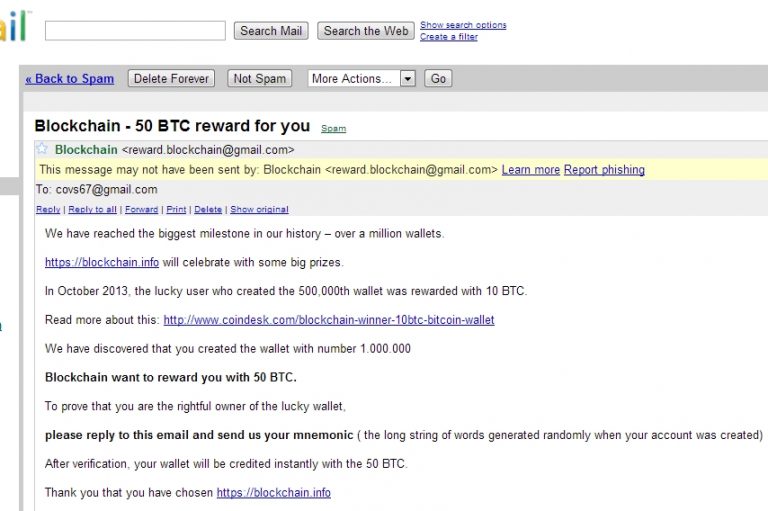
Phishing attacks involve tricking individuals into revealing sensitive information such as private keys or passwords, usually through deceptive emails or fake websites that mimic legitimate services.An infamous phishing campaign occurred in 2017 when attackers created a fake version of the popular cryptocurrency exchange Binance. Users were directed to a site that looked identical to Binance’s official site and were prompted to log in.

Once the attackers obtained their credentials, they drained the users’ accounts of Bitcoin and other cryptocurrencies.

Fake Exchanges

Fake exchanges are fraudulent platforms that mimic legitimate cryptocurrency exchanges to trick users into depositing funds. These scams often promise attractive trading conditions but eventually disappear with the investors’ money. A prominent example is the exchange called Coin.mx, which was revealed as a scam in 2015. It offered users a platform to trade Bitcoin and other cryptocurrencies, but in reality, it was a front for money laundering and fraud.

Many users lost significant amounts of funds before regulators intervened.

Distinguishing Genuine Opportunities from Scams

Identifying genuine investment opportunities often requires scrutiny of several key characteristics. Legitimate projects typically have clear documentation, transparent operations, and verifiable team members. Key factors to consider include:

  • Transparency: Genuine projects disclose their technology, business model, and team members.
  • Regulatory Compliance: Legitimate exchanges and investment opportunities comply with local regulations.
  • Realistic Returns: If an investment promises returns that seem too good to be true, it likely is.
  • Community Feedback: Check for reviews and feedback from existing users or industry experts.
  • Secure Platforms: Ensure that the website has security measures like two-factor authentication and SSL encryption.

Always conduct thorough research and due diligence before investing in any cryptocurrency project.

Warning Signs of Bitcoin Scams

Being aware of the warning signs of bitcoin scams is crucial for safeguarding your investments and financial wellbeing. As cryptocurrency continues to grow in popularity, so does the number of scams targeting unsuspecting users. Recognizing these red flags can help you avoid falling victim to fraudulent schemes that promise unrealistic returns or require personal information.Several common indicators can hint at potential scams in the bitcoin realm.

These warning signs not only help individuals identify suspicious offerings but also educate potential investors on the characteristics of legitimate opportunities versus scams. Understanding these signs is key to making informed financial decisions.

Common Warning Signs of Bitcoin Scams

It is essential to recognize certain warning signs when evaluating potential bitcoin investments. Below are common red flags that may indicate a scam:

  • Guaranteed Returns: If an investment promises guaranteed returns, especially those that seem too good to be true, it is likely a scam. Legitimate investments come with risks.
  • Pressure to Invest Quickly: Scammers often create a sense of urgency, pushing you to invest before you have time to think or do proper research.
  • Lack of Transparency: If the investment strategy or business model is unclear, or if you can’t find reliable information about the company, be cautious.
  • Unsolicited Offers: Receiving offers through social media, email, or messages from unknown sources is a significant red flag.
  • Complicated Withdrawal Process: If withdrawing your funds is challenging or comes with high fees, it may indicate a scam.

Red Flags Table for Bitcoin Investments

Understanding the warning signs can aid in making informed decisions. The table below summarizes key red flags to look for when considering a bitcoin investment:

Red Flag Description
High Returns with Low Risk Claims of high returns with minimal risk should be scrutinized, as high returns typically come with high risk.
No Clear Business Model Vague or poorly defined business plans can signify a lack of legitimacy.
Unregistered Investments Ensure that any investment opportunity is registered with appropriate regulatory bodies.
Anonymous Team A legitimate company typically has identifiable team members with verifiable backgrounds.
Pressure Tactics Being urged to invest quickly or without sufficient information is a significant warning sign.

Case Studies and Analysis of Warning Signs

Analyzing real-life scams can provide valuable insights into the warning signs that were overlooked. One notorious case is the BitConnect Ponzi scheme, which promised investors incredibly high returns. Many individuals were lured in by testimonials and aggressive marketing, while the lack of a clear business model and refusal to allow withdrawals became significant red flags as the scheme unraveled.Another example is the PlusToken scam, which predominantly targeted investors in Asia.

The scheme used social media and chat apps to promote its fraudulent offerings, emphasizing guaranteed profits and high returns. Eventually, it became evident that the operators were anonymous and the business model was convoluted. These cases highlight the importance of vigilance and due diligence when engaging with bitcoin investment opportunities.

Impact of Bitcoin Scams on Investors

Bitcoin scams not only rob individuals of their hard-earned money but also leave lasting emotional and financial scars. The allure of quick profits has made many investors vulnerable to deceitful schemes that promise high returns with minimal risk. Unfortunately, the reality is far different, and the repercussions are severe, affecting multiple aspects of victims’ lives.The financial implications of falling victim to a bitcoin scam can be devastating.

Victims often lose substantial sums of money, which can lead to severe financial strain. According to the Federal Trade Commission (FTC), U.S. consumers lost over $80 million to cryptocurrency-related scams in 2021 alone, highlighting the scale of the problem. In 2022, reports indicated that losses increased significantly, with some estimates suggesting losses exceeded $1.5 billion globally from various forms of cryptocurrency fraud.

Emotional and Psychological Consequences

The emotional toll on scam victims is often overlooked but can be just as damaging as the financial losses. The feelings of regret, shame, and anger can lead to prolonged distress. Victims may experience anxiety or depression as they come to terms with their losses. Rebuilding trust, both in themselves and in future investment opportunities, can be a long and painful process.

The long-term consequences of encountering a bitcoin scam can manifest in various ways. Victims may find it challenging to regain their financial footing, often leading to a cycle of debt. Additionally, trust issues may extend beyond financial matters, affecting personal relationships and overall mental health. Reassessing one’s financial strategy becomes necessary, but the lingering fear of being scammed again can hinder meaningful investment decisions.

“Victims of bitcoin scams not only suffer financial losses; they also endure emotional trauma that can last for years.”

Awareness and education are crucial in mitigating these impacts. Understanding the psychology behind scams, recognizing red flags, and sharing experiences within communities can empower potential investors to protect themselves against similar threats in the future.

Prevention Strategies Against Bitcoin Scams

As cryptocurrency continues to gain traction, the risk of falling victim to scams has also increased. However, there are proactive strategies that individuals can employ to reduce their chances of being scammed. Understanding how to protect oneself is crucial for anyone interested in investing in Bitcoin or other cryptocurrencies.Conducting thorough research before making any investment is essential. This step not only includes studying the cryptocurrency market but also assessing the credibility of platforms and opportunities available.

Below are some strategies that can help individuals safeguard their investments in Bitcoin from potential scams.

Researching Cryptocurrency Opportunities

Engaging in comprehensive research before investing can significantly lower the risk of falling prey to scams. Below are important aspects to consider:

  • Verify Backgrounds: Look for information about the founders and team behind the cryptocurrency project. Check their professional history and credentials to ensure they are legitimate.
  • Check for Regulatory Compliance: Ensure that the platform or coin complies with local regulations. Legitimate businesses typically have necessary registrations and licenses.
  • Analyze Whitepapers: A credible cryptocurrency project should have a well-detailed whitepaper explaining its purpose, technology, and vision. This document should be clear and transparent.
  • Review Community Feedback: Search for reviews and discussions in forums or social media groups. Feedback from early adopters can provide valuable insights into the project’s credibility.
  • Investigate Previous Incidents: Research if there have been any previous scams or issues associated with the project or platform. A history of problems can be a red flag.

Assessing Platform Credibility

Evaluating the credibility of a Bitcoin platform is critical before investing. Here are factors to consider when assessing a platform:

  • User Experience: A legitimate platform should have a clear, user-friendly interface. Complicated navigation or poor design may indicate a scam.
  • Security Measures: Check for security features like two-factor authentication (2FA) and SSL encryption. These are essential to protect user data and funds.
  • Customer Support: Reliable platforms usually offer responsive customer support. Evaluate their availability and willingness to assist users.
  • Transaction Transparency: Ensure that the platform discloses transaction fees and provides a clear overview of how transactions are processed.
  • Partnerships and Endorsements: Look for partnerships with reputable financial institutions or endorsements from recognized figures in the crypto space, which often indicate credibility.

“Investing in cryptocurrency without proper research is like sailing into uncharted waters without a map; it’s risky and could lead to serious losses.”

By implementing these prevention strategies, individuals can create a safer investment environment for themselves and significantly reduce their risk of falling victim to Bitcoin scams.

Legal and Regulatory Response to Bitcoin Scams

The rise of Bitcoin and other cryptocurrencies has led to a surge in financial scams targeting unsuspecting investors. Legal frameworks and regulations are crucial in combating these fraudulent activities and protecting consumers. Countries around the world have begun to implement various strategies to regulate cryptocurrency transactions and enhance security in the market.The legal response to Bitcoin scams includes a combination of consumer protection laws, anti-fraud measures, and specific regulations tailored to cryptocurrency.

Regulatory bodies are working to create a safer environment for investors by enforcing compliance among cryptocurrency exchanges and platforms.

Current Legal Frameworks and Regulations

Many countries have established legal frameworks to address the challenges posed by Bitcoin scams. These regulations generally focus on ensuring transparency in cryptocurrency transactions and holding scammers accountable. Key components of these frameworks include:

  • Licensing Requirements: Many jurisdictions now require cryptocurrency exchanges to obtain licenses to operate legally. This helps regulators monitor their activities and ensure compliance with anti-money laundering (AML) and know your customer (KYC) regulations.
  • Consumer Protection Laws: These laws are designed to safeguard investors against fraudulent schemes and scams. Authorities often provide guidelines on how to recognize potential scams and what steps to take if one is encountered.
  • Criminal Prosecution: Scammers can face serious legal consequences, including fines and imprisonment. Authorities are increasingly taking legal action against individuals and organizations involved in fraudulent cryptocurrency operations.

Comparative Analysis of Regulatory Approaches

Different countries have adopted various regulatory approaches to handling Bitcoin scams and cryptocurrency in general. Here’s how some of them compare:

  • United States: The U.S. has a fragmented regulatory landscape, with different states implementing their own regulations. The Securities and Exchange Commission (SEC) and the Commodity Futures Trading Commission (CFTC) play significant roles in overseeing cryptocurrency activities.
  • European Union: The EU aims for a harmonized approach to cryptocurrency regulation through the Markets in Crypto-Assets (MiCA) regulation, which establishes clear guidelines for crypto assets and aims to enhance consumer protection.
  • China: China has taken a more aggressive stance by banning most cryptocurrency transactions and Initial Coin Offerings (ICOs) since 2017, focusing on controlling financial risks and maintaining social stability.

Recent Legal Actions Against Scammers

Recent years have seen numerous legal actions taken against scammers involved in cryptocurrency fraud. Some notable cases include:

  • BitConnect: In one of the most infamous Ponzi schemes, BitConnect was shut down in 2018, leading to criminal charges against its promoters. Authorities seized assets worth millions of dollars from involved individuals.
  • OneCoin: The OneCoin scam, which defrauded investors of billions globally, led to multiple arrests across countries. The founder, Ruja Ignatova, remains a fugitive, while her associates have faced various legal repercussions.
  • PlusToken: This crypto Ponzi scheme, which operated primarily in Asia, reportedly defrauded investors of approximately $2 billion. Chinese authorities have arrested several key figures behind PlusToken, and investigations are ongoing.

Reporting and Recovering from Bitcoin Scams

How to Recognize Crypto and Bitcoin Scams - Moralis Academy

Bitcoin scams continue to plague the cryptocurrency landscape, causing significant financial losses for unsuspecting investors. Reporting these scams not only helps victims but also serves to protect potential future victims. The importance of taking action against scammers cannot be overstated, as it aids law enforcement in tracking down these criminals and contributes to a safer cryptocurrency environment.Reporting a bitcoin scam involves notifying the appropriate authorities, such as local law enforcement and regulatory agencies.

This step is crucial because it can help initiate investigations and may lead to the recovery of lost assets. Victims should gather all relevant information, including transaction details, communications with the scammer, and any other evidence that may assist in the investigation.

Process of Reporting a Bitcoin Scam

Victims should follow a systematic approach when reporting a bitcoin scam. The following steps Artikel the reporting process:

1. Collect Evidence

Gather all communications with the scammer, transaction IDs, wallet addresses, and any other documentation that supports your claim. This information is vital for authorities to take action.

2. Contact Local Law Enforcement

Reach out to your local police department to file a report. Provide them with all gathered evidence and be prepared to answer their questions regarding the scam.

3. Report to Regulatory Bodies

In many countries, there are financial regulatory authorities that oversee cryptocurrency transactions. For example, in the United States, you can report scams to the Federal Trade Commission (FTC) or the Commodity Futures Trading Commission (CFTC).

4. Notify Cryptocurrency Exchanges

If you’ve sent funds to a wallet address associated with a particular exchange, contact that exchange immediately. While they may not be able to recover your funds, they can take action against the scammer’s account.

5. Inform Online Platforms

If the scam occurred on a social media platform or marketplace, report the scammer’s account directly to those platforms. This can prevent further scams from occurring.

Steps to Recover Lost Funds

Recovering funds lost to bitcoin scams can be extremely challenging, but victims can take proactive steps to attempt recovery. Although there is no guaranteed way to retrieve lost funds, the following measures can potentially aid in the recovery process:

1. Contact Your Bank or Credit Card Company

If you made a payment using a bank account or credit card, reach out to your financial institution as soon as possible. They may have mechanisms in place for disputing transactions related to scams.

2. Consult Legal Counsel

Seek advice from a lawyer who specializes in cryptocurrency or financial fraud. They can help you understand your rights and explore possible legal avenues for recovery.

3. Engage with Recovery Services

There are several professional recovery services that claim to assist victims of cryptocurrency scams in retrieving lost funds. Research such services thoroughly, as some may be scams themselves.

4. Join Victim Support Groups

Connecting with other victims can provide emotional support and valuable information sharing. Many online forums and social media groups exist for this purpose.

Resources for Victims of Cryptocurrency Scams

Victims of bitcoin scams can access various resources for support and information. The following list Artikels essential resources available:

Federal Trade Commission (FTC)

Offers guidance on reporting scams and protecting personal information.

CipherTrace

Provides intelligence on cryptocurrency scams and offers tips for safe trading.

Cointelegraph

Frequently publishes articles on recent scams, helping victims stay informed about the latest fraudulent schemes.

Bitcoin Abuse Database

A community-driven platform where victims can report and track bitcoin addresses associated with scams.

Local Consumer Protection Offices

Many regions have consumer protection agencies that can assist in reporting scams and providing guidance on next steps.

“Taking action against cryptocurrency scams not only aids individual victims but also strengthens the community’s defenses against future fraud.”

End of Discussion

In conclusion, understanding bitcoin scams is essential for anyone looking to invest in cryptocurrency. By recognizing the various types of scams, being aware of their warning signs, and implementing strong prevention strategies, investors can significantly reduce their risk of falling victim to fraud. The journey into cryptocurrency can be rewarding, but it also requires vigilance and education to ensure safety and financial well-being.

Questions Often Asked

What are common types of bitcoin scams?

Common types include Ponzi schemes, phishing attacks, fake exchanges, and investment fraud.

How can I identify a bitcoin scam?

Look for red flags such as unrealistic profit promises, lack of transparency, and pressure to invest quickly.

What should I do if I fall victim to a bitcoin scam?

Report the scam to authorities, gather evidence, and consider contacting a financial advisor for recovery options.

Are there any legal protections against bitcoin scams?

Legal protections vary by country, but many have regulations in place to protect consumers from fraud.

How much money is lost to bitcoin scams annually?

Billions of dollars are lost each year globally due to various bitcoin scams.

Bitcoin down is the current buzz in the cryptocurrency world, as many investors are grappling with significant declines in Bitcoin’s value. This downturn isn’t just about numbers on a screen; it reflects broader economic trends, regulatory shifts, and investor psychology at play. With recent statistics showing dramatic price fluctuations, understanding what’s driving these changes is crucial for anyone involved or interested in the crypto space.

As we explore the current state of Bitcoin, the factors contributing to its decline, and its impact on investors, we uncover the intricate web of influences molding this digital currency’s future. The conversation will also touch on community responses and recovery strategies from past downturns, providing a comprehensive view of the situation.

Current State of Bitcoin

The current landscape of Bitcoin is marked by significant volatility and noticeable trends that have shaped its recent performance. Investors have been keeping a close eye on fluctuations, and several factors have contributed to its current valuation and market sentiment.Over the past month, Bitcoin has experienced notable price fluctuations that highlight its unpredictable nature. As of the latest tracking, Bitcoin’s value has dipped approximately 15%, moving from around $30,000 to approximately $25,500.

This decline has been accompanied by increased trading volumes, reflecting heightened market activity and investor anxiety. Such volatility is not uncommon in the cryptocurrency space, but the recent changes have sparked conversations about the future of Bitcoin and its potential recovery.

Influential Events on Bitcoin’s Downturn

Several key events have significantly influenced Bitcoin’s recent downturn, leading to shifts in market confidence. Understanding these events is crucial for grasping the current state of Bitcoin and its trajectory.

  • The announcement of regulatory scrutiny by major governments has created apprehension among investors. The U.S. Securities and Exchange Commission (SEC) has been particularly vocal, indicating potential crackdowns on unregistered securities and exchanges linked to cryptocurrencies.
  • Macroeconomic factors, such as rising interest rates and inflation concerns, have caused investors to reassess their risk appetite. This shift has led many to divest from high-risk assets like Bitcoin, contributing to its declining price.
  • Significant sell-offs by large holders, commonly referred to as “whales,” have added to the downward pressure. These market movements can trigger panic among smaller investors, leading to further declines.
  • Sentiment changes driven by social media and news cycles have also played a role, with negative headlines prompting quick reactions from traders. In particular, incidents involving hacks, scams, or exchange failures have had an immediate impact on Bitcoin’s valuation.

Factors Contributing to Bitcoin’s Decline

The decline in Bitcoin’s value can be attributed to a range of economic, regulatory, and psychological factors. Understanding these elements is crucial for investors looking to navigate the volatile cryptocurrency landscape. Delving into the specifics of each contributing factor reveals a complex interplay that has led to Bitcoin’s recent downturn.

Economic Indicators Affecting Bitcoin’s Market

Several economic indicators have played a significant role in influencing Bitcoin’s market dynamics. Key indicators include inflation rates, interest rates, and overall economic growth. For instance, rising inflation often leads to increased demand for alternative assets like Bitcoin. However, if inflation rises too sharply, central banks may respond with aggressive interest rate hikes, which can diminish the attractiveness of riskier assets, including cryptocurrencies.

In the current climate, the following indicators are particularly relevant:

  • Inflation Rates: Persistent high inflation tends to erode the purchasing power of fiat currencies, prompting some investors to seek refuge in Bitcoin. However, if inflation stabilizes, this demand may lessen.
  • Interest Rates: When central banks raise interest rates, the cost of borrowing increases, often leading to reduced investment in volatile assets like Bitcoin. Higher rates can deter speculative investment, negatively impacting Bitcoin prices.
  • Stock Market Performance: Bitcoin is increasingly correlated with the stock market. Economic uncertainty often leads to sell-offs in both markets, where investors liquidate positions to cover losses or maintain liquidity.

Regulatory Changes Impacting Investor Confidence

Regulatory changes across the globe have significantly influenced investor sentiment towards Bitcoin. Governments continue to grapple with how to regulate cryptocurrencies, leading to uncertainty in the market. Notable regulatory developments include:

  • Tax Regulations: Stricter tax reporting requirements have made it more challenging for individuals to invest in Bitcoin. Increased scrutiny can deter new investors.
  • Bans and Restrictions: Countries like China have implemented outright bans on cryptocurrency trading and mining, leading to fears of a global crackdown that affects the entire crypto ecosystem.
  • SEC Enforcement Actions: Regulatory bodies such as the Securities and Exchange Commission (SEC) have taken action against cryptocurrency exchanges and initial coin offerings (ICOs), creating uncertainty about the legal status and future of various crypto assets.

Investor Psychology in the Decline of Bitcoin Prices

Investor psychology plays a crucial role in the cryptocurrency market, where emotions can drive price movements significantly. Market sentiment can shift rapidly, especially in response to news, leading to panic selling or irrational exuberance. Important psychological factors include:

  • Fear of Missing Out (FOMO): During bullish trends, investors often rush to buy Bitcoin, fearing they will miss potential profits. However, once prices start to decline, FOMO can quickly turn to fear, leading to panic selling.
  • Market Sentiment and News Cycles: News events, whether positive or negative, can cause significant shifts in investor behavior. Negative headlines, such as regulatory crackdowns or security breaches, can lead to a loss of confidence.
  • Herd Behavior: Investors often follow the crowd, leading to exaggerated market movements. When a significant number of investors start selling, others tend to follow suit, exacerbating the decline in prices.

Impact on Investors

The downturn of Bitcoin has led to significant repercussions for investors, manifesting in various strategies and psychological effects. Understanding how different investor classes cope with the current market conditions is crucial for navigating this volatile landscape.

Strategies for Coping with Bitcoin’s Downturn

In a declining market, investors often need to rethink their strategies to protect their assets and capitalize on future opportunities. Here are some common approaches:

  • Hedging with Stablecoins: Many investors shift part of their portfolios to stablecoins to minimize volatility and preserve capital during downturns.
  • Long-Term Holding: Some investors maintain their positions, believing in Bitcoin’s long-term potential and viewing price declines as temporary setbacks.
  • Dollar-Cost Averaging: Investors may adopt a dollar-cost averaging strategy, where they invest a fixed amount regularly, thus spreading the risk over time.
  • Diversification: Expanding into other cryptocurrencies or asset classes can help mitigate risk and provide alternative growth opportunities.

Additionally, the importance of maintaining an informed and flexible mindset cannot be overstated. As market conditions change, so should strategies.

Psychological Effects on Long-Term Bitcoin Holders

Holding onto Bitcoin during steep declines can weigh heavily on investors psychologically. The emotional toll includes:

  • Fear of Loss: As Bitcoin’s value drops, long-term holders often experience anxiety about their investments and the potential for further declines.
  • Investor Fatigue: Continuous market volatility can lead to burnout, causing some investors to lose interest or confidence in Bitcoin.
  • Confirmation Bias: Long-term holders may become overly attached to their investments, focusing on positive signals while ignoring negative market trends.
  • Community Influence: The reactions and sentiments expressed in online communities can amplify emotional responses, making it difficult for individuals to think rationally.

These psychological factors highlight the importance of mental resilience and awareness in maintaining investment strategies during turbulent times.

Reactions of Retail versus Institutional Investors

The responses to Bitcoin’s decline can vary significantly between retail and institutional investors. Understanding these differences provides insight into market dynamics:

  • Retail Investors: Typically more reactive to market news, retail investors often panic sell during downturns, driven by fear and uncertainty.
  • Institutional Investors: These investors generally maintain a more strategic approach, often viewing price declines as buying opportunities. Their strategies are often guided by long-term goals rather than short-term fluctuations.
  • Market Influence: Institutional investors possess more influence over market movements, often stabilizing the market through large buy orders during dips.
  • Access to Resources: Institutions have access to advanced analytics and risk management tools that allow them to make more informed decisions compared to retail investors.

This contrast in reactions illustrates the varying levels of experience and resources available to different investor classes, influencing overall market behavior.

Future Predictions for Bitcoin

As Bitcoin experiences fluctuations, the potential for recovery and growth remains a topic of considerable interest among investors and analysts. Understanding future predictions involves looking at various scenarios, expert insights, and technological advancements that could significantly affect Bitcoin’s market performance.

Timeline of Potential Recovery Scenarios for Bitcoin

The recovery of Bitcoin is often viewed through different timelines based on market behaviors and external factors. Here are some possible scenarios:

  • Short-term Recovery (1-6 months): Analysts predict that Bitcoin could bounce back from its recent lows if favorable regulatory news or increased institutional investment occurs.
  • Mid-term Recovery (6-12 months): With the upcoming halving event in 2024, market sentiment may shift positively, potentially driving prices higher as supply diminishes.
  • Long-term Recovery (1-3 years): Many experts believe that as Bitcoin adoption increases, particularly in payment systems and remittances, its value could stabilize above $100,000, reflecting broader acceptance and integration into financial systems.

Expert Opinions on Future Bitcoin Value

Expert analysts have varied opinions on the future value of Bitcoin, often influenced by market trends and historical data.

“Bitcoin’s resilience and network effect are key indicators for long-term value growth.”

Crypto Market Analyst

Some analysts believe Bitcoin could reach unprecedented heights, driven by factors such as:

  • Institutional Adoption: Increased investment from hedge funds and family offices could create upward pressure on Bitcoin prices.
  • Regulatory Clarity: As governments establish clearer regulations, institutional and retail investors may feel more secure investing in Bitcoin.
  • Macro Economic Trends: Factors like inflation and currency devaluation could lead investors to view Bitcoin as a hedge, enhancing its value proposition.

Influential Technological Advancements

Technological advancements are critical in shaping Bitcoin’s market performance. These advancements could lead to increased efficiency and adoption.

  • Layer 2 Solutions: Developments like the Lightning Network are designed to enhance transaction speeds and reduce fees, making Bitcoin more viable for everyday transactions.
  • Smart Contracts Capabilities: Enhancements in Bitcoin’s programming capabilities could lead to more complex financial products, attracting a broader user base.
  • Improved Security Measures: Innovations in security protocols could reduce theft and fraud incidents, increasing investor confidence in holding Bitcoin.

Comparison with Other Cryptocurrencies

As the market for cryptocurrencies continues to evolve, the performance of Bitcoin, the leading digital currency, has been a focal point for both investors and analysts. During periods of decline, it’s crucial to compare Bitcoin’s performance with that of other major cryptocurrencies, known as altcoins, to understand broader market trends and investor behavior. This comparison reveals insights into how altcoins respond to Bitcoin’s fluctuations and highlights the differences in market dynamics between Bitcoin and emerging digital currencies.

Performance of Major Cryptocurrencies

The performance of Bitcoin during its recent decline can be juxtaposed with that of several prominent altcoins, which often display varying levels of resilience or vulnerability. While Bitcoin has seen a significant drop, other major coins such as Ethereum (ETH), Binance Coin (BNB), and Cardano (ADA) have also experienced downturns, albeit to differing extents. For instance, during the last quarter, Bitcoin’s value fell by approximately 20%, while Ethereum noted a decline of around 25%.

Binance Coin, on the other hand, faced a sharper decline of over 30%. The following table illustrates the comparative performance of these cryptocurrencies during the same timeframe:

Cryptocurrency Percentage Decline
Bitcoin (BTC) 20%
Ethereum (ETH) 25%
Binance Coin (BNB) 30%
Cardano (ADA) 22%

This data indicates that while Bitcoin remains the market leader, its decline does not occur in isolation; rather, it tends to coincide with significant movements in the altcoin market.

Reactions of Altcoins to Bitcoin’s Downturn

Altcoins have exhibited a range of reactions to Bitcoin’s downturn, which is often seen as a bellwether for the overall cryptocurrency market. Some altcoins have historically followed Bitcoin’s price movements closely, leading to a correlated decline. However, certain altcoins have demonstrated a degree of independence, sometimes rising even as Bitcoin falls. For example, stablecoins like Tether (USDT) often maintain their value amid market volatility, providing a refuge for investors looking to avoid the harsh impacts of Bitcoin’s decline.

Emerging decentralized finance (DeFi) tokens, such as Uniswap (UNI) and Aave (AAVE), have also shown resilience, as their value propositions are tied to the functionality of smart contracts rather than direct price action of Bitcoin.

Market Dynamics Between Bitcoin and Emerging Digital Currencies

The market dynamics between Bitcoin and newer digital currencies are shaped by several factors, including technology, use cases, and investor sentiment. Bitcoin, often referred to as digital gold, tends to attract institutional investors due to its established brand and perceived stability. In contrast, emerging digital currencies often target niche markets with specific applications, such as DeFi, NFTs, or scalability solutions.The difference in technological advancements also plays a critical role.

While Bitcoin’s blockchain is primarily focused on security and decentralization, other cryptocurrencies like Solana and Avalanche emphasize speed and scalability, attracting a different segment of investors. This diversification in use cases can lead to varying market responses during downturns, as investors may flock to assets that align with their investment strategies.In summary, while Bitcoin’s decline significantly impacts the cryptocurrency landscape, altcoins display a complex array of responses influenced by their individual characteristics and market positioning.

Understanding these dynamics is essential for investors looking to navigate the volatile waters of the cryptocurrency market.

Historical Context of Bitcoin Downturns

Why Bitcoin is Going Down / Up in 2025? What Determines its Price?

Throughout its history, Bitcoin has experienced several significant downturns, each marked by a mix of market sentiment, regulatory challenges, and macroeconomic factors. Understanding these past declines provides critical insights into the current market conditions and potential recovery trajectories. This historical context showcases how Bitcoin has navigated through turmoil, offering lessons for investors and enthusiasts alike.

Previous Instances of Significant Declines

Bitcoin has undergone notable downturns, with a few key instances standing out in its brief but rich history. Each of these periods illustrated the volatility inherent in cryptocurrency markets and the various external factors that influenced price movements.

  • 2013 Bubble Burst: Following an unprecedented rise to over $1,100, Bitcoin plummeted to around $200 by early 2015. Regulatory fears, particularly from China, played a significant role in this decline.
  • 2017 Peak and Crash: After soaring to nearly $20,000 in December 2017, Bitcoin’s price fell to about $3,200 by December 2018. This crash coincided with increased regulatory scrutiny and the bursting of the ICO bubble.
  • COVID-19 Crash of 2020: In March 2020, Bitcoin’s price dropped from approximately $9,000 to around $4,000 within a few days due to global economic uncertainty caused by the pandemic. However, it quickly rebounded and soared to new heights later that year.

Patterns from Historical Data

Analyzing past downturns reveals certain patterns that might apply to the current Bitcoin situation. One significant observation is the cyclical nature of Bitcoin’s price movements, often following periods of rapid growth with steep corrections.

  • Market Sentiment: Investor sentiment often plays a crucial role, with fear and uncertainty leading to mass sell-offs.
  • Regulatory Impact: Regulatory announcements can cause immediate price reactions, emphasizing the importance of government stances on cryptocurrencies.
  • Technical Corrections: Bitcoin frequently experiences technical corrections after reaching new price milestones, as profit-taking occurs among investors.

Recovery Strategies from Past Downturns

History shows that Bitcoin has a remarkable ability to recover from downturns, employing various strategies that investors and market participants have utilized. These strategies have ranged from technological advancements to broader market acceptance.

  • Increased Adoption: Following downturns, Bitcoin often sees increased adoption by institutions and retail investors, which helps stabilize prices. For instance, the 2020 recovery was fueled by institutional investments, notably by companies like Tesla and MicroStrategy.
  • Technological Improvements: Innovations such as the Lightning Network have enhanced Bitcoin’s scalability and usability, contributing to its recovery and long-term growth.
  • Market Expansion: Over time, as more exchanges and financial products related to Bitcoin have emerged, they have provided liquidity and fostered a more stable trading environment.

“Bitcoin’s history of downturns has demonstrated resilience, often bouncing back stronger due to increased adoption and technological advancements.”

Community Responses

As Bitcoin experiences a downturn, the cryptocurrency community is rallying together to navigate these challenging times. The collective response from enthusiasts, investors, and developers highlights the resilient spirit of the crypto community, emphasizing collaboration and innovation. Various initiatives have emerged that aim to provide support, education, and renewed optimism for Bitcoin’s future.Social media plays a pivotal role in shaping public perception and discourse during market downturns.

Platforms like Twitter, Reddit, and Telegram become hubs for discussions, where community members share insights, strategies, and emotional support. The discourse often reflects a mix of concern, optimism, and calls for solidarity within the community.

Initiatives Supporting Bitcoin

A number of initiatives have been launched within the community to bolster Bitcoin during its decline. These initiatives focus on education, advocacy, and market stabilization. The following Artikels some of these movements:

  • Bitcoin Education Programs: Organizations and influencers are increasing efforts to educate new investors on the fundamentals of Bitcoin, emphasizing its long-term value and the importance of holding through volatility.
  • Pro-Bitcoin Advocacy Groups: Groups are actively lobbying for more favorable regulations and policies that support Bitcoin adoption and usage, aiming to create a more conducive environment for growth.
  • Community Fundraising and Crowdfunding: Initiatives such as charity drives and crowdfunding campaigns have been organized to support developers and projects that contribute to Bitcoin’s ecosystem.
  • Social Trading Platforms: New platforms are emerging that encourage seasoned investors to share their trading strategies and insights, fostering a collaborative learning environment.
  • Local Meetups and Conferences: Community members are organizing meetups and conferences to discuss strategies, share experiences, and strengthen networks among Bitcoin enthusiasts.

The collective effort within the cryptocurrency community to support Bitcoin showcases their commitment and belief in its potential. Despite the challenges, these initiatives reflect a proactive approach to maintaining enthusiasm and engagement during tough market conditions.

The cryptocurrency community’s resilience is evident in its response to Bitcoin’s decline, demonstrating an unwavering commitment to its long-term vision.

Social media’s influence during downturns cannot be understated. It serves as a powerful tool for shaping discussions and perceptions, allowing for rapid dissemination of information and community sentiment. During Bitcoin’s recent decline, hashtags and trending topics have sparked conversations about market strategies and the psychological impacts of price fluctuations. The presence of influencers and thought leaders amplifies these discussions, often providing a sense of direction and reducing uncertainty for followers.

Social media has become a lifeline for many investors, facilitating a shared space for support, information, and community resilience.

The engagement seen on these platforms not only aids in community cohesion but also influences the broader investor sentiment, which can have a substantial impact on market dynamics. The collective voices on social media can often sway decisions and foster a more optimistic outlook, even amidst uncertainty.

Wrap-Up

In conclusion, the journey of Bitcoin down is far from over; it serves as a reminder of the volatility inherent in the cryptocurrency market. While challenges loom large, opportunities for recovery and growth remain. By analyzing historical data, investor reactions, and expert predictions, we can better navigate this unpredictable landscape and perhaps emerge stronger on the other side.

FAQ Section

What caused the recent decline in Bitcoin’s value?

Several factors, including economic indicators, regulatory changes, and shifts in investor psychology, have contributed to Bitcoin’s recent downturn.

How can investors cope with Bitcoin’s downturn?

Investors can adopt strategies such as diversifying their portfolios, staying informed, and maintaining a long-term perspective to navigate the downturn.

Are institutional investors reacting differently than retail investors?

Yes, institutional investors often have more resources and strategies to weather downturns, while retail investors may experience heightened emotional responses.

What historical patterns can inform current Bitcoin trends?

Past instances of Bitcoin declines show that recoveries often follow periods of consolidation and innovation within the market.

Is there a chance for Bitcoin to recover in the near future?

Experts predict various scenarios for recovery, with technological advancements and market demand playing critical roles in Bitcoin’s future performance.

Navigating the world of cryptocurrency can feel daunting, especially when considering a purchase method like PayPal. This exploration delves into the specifics of buying Bitcoin with PayPal in Canada, examining the availability, limitations, and the broader context of Bitcoin transactions within the Canadian market. We’ll unpack the steps, potential challenges, and security considerations to give you a comprehensive understanding of this process.

The Canadian market for cryptocurrencies is growing rapidly, but understanding the nuances of specific transactions, like using PayPal for Bitcoin purchases, is crucial for a smooth and secure experience. This article provides a practical guide to buying Bitcoin using PayPal, covering various aspects from the platforms available to the security measures you should consider.

Bitcoin Purchasing Methods in Canada

Acquiring Bitcoin in Canada offers a variety of methods, each with its own set of advantages and disadvantages. Understanding these options allows individuals to choose the method best suited to their needs, taking into account factors like security, fees, and ease of use. This comprehensive overview details the available avenues for Bitcoin purchases, offering insights into the nuances of each approach.

Bitcoin Purchasing Methods

Several avenues are available for acquiring Bitcoin in Canada. Choosing the right method depends on individual priorities. These methods vary significantly in their complexity, associated fees, and security protocols.

Method Name Description Pros Cons Steps
Cryptocurrency Exchanges Established platforms facilitating the buying and selling of cryptocurrencies, including Bitcoin. They typically provide user accounts, transaction history, and various security features. Wide selection of cryptocurrencies, often lower fees compared to other methods, advanced trading tools, and generally good security protocols when reputable platforms are used. Requires account setup and verification, potential for platform-specific fees and limitations, and reliance on the platform’s security measures. 1. Create an account and verify your identity. 2. Deposit funds into the account (often via bank transfer, credit/debit card). 3. Purchase Bitcoin using the deposited funds. 4. Securely store the Bitcoin.
Peer-to-Peer (P2P) Trading Platforms Facilitates direct transactions between buyers and sellers, bypassing intermediaries. Platforms often provide escrow services to protect both parties. Potentially lower fees compared to exchanges, greater flexibility in negotiation. Higher risk of scams and fraud compared to exchanges, lack of regulatory oversight, potential for miscommunication and disputes, and greater responsibility on the buyer to verify the seller. 1. Choose a reputable P2P platform. 2. Create an account and verify your identity. 3. List the Bitcoin amount you want to buy. 4. Identify and contact a seller. 5. Complete the transaction through the escrow service. 6. Verify and receive the Bitcoin.
Bitcoin ATMs Physical kiosks allowing the purchase and sale of Bitcoin using cash. Convenient for cash transactions, quick transactions. High fees compared to exchanges, limited Bitcoin amounts, potential for scams or fraudulent machines, and may have geographical limitations. 1. Locate a Bitcoin ATM. 2. Insert cash into the machine. 3. Select the desired amount of Bitcoin to purchase. 4. Verify the transaction and receive the Bitcoin.
Over-the-Counter (OTC) Dealers Direct dealings with individuals or businesses facilitating Bitcoin purchases outside of exchanges. Potential for lower fees, greater flexibility in terms of transaction amounts. Higher risk compared to exchanges, potential for fraud, requires thorough due diligence on the counterparty. 1. Research and vet the OTC dealer. 2. Negotiate the price and transaction terms. 3. Complete the transaction securely and verify the received Bitcoin.

Factors to Consider

When selecting a Bitcoin purchasing method, it is important to carefully weigh the factors of security, fees, and convenience. The security of the platform, the fees associated with the transaction, and the overall ease of use are crucial considerations.

PayPal and Bitcoin Transactions in Canada

Directly purchasing Bitcoin with PayPal in Canada is currently not a straightforward option. While PayPal itself facilitates various financial transactions, its Bitcoin integration is limited in the Canadian market. This often necessitates utilizing alternative platforms or methods for acquiring Bitcoin.The current state of using PayPal to buy Bitcoin in Canada is largely restricted. While PayPal supports cryptocurrency transactions in some global markets, Canadian users often find themselves unable to directly purchase Bitcoin using their PayPal accounts.

This is primarily due to regulatory and operational factors specific to the Canadian financial landscape.

Availability and Limitations of PayPal for Bitcoin Purchases

PayPal’s availability for Bitcoin purchases in Canada is limited. Users may encounter difficulties finding Canadian-based services that enable Bitcoin purchases via PayPal. This is a significant hurdle, especially for users seeking a seamless, integrated method. Restrictions may also arise from the stringent regulatory environment for cryptocurrency transactions in Canada.

Potential Obstacles and Restrictions

Several potential obstacles exist for using PayPal to buy Bitcoin in Canada. These obstacles include, but are not limited to, regulatory compliance issues, compatibility problems between PayPal’s systems and Bitcoin platforms, and a lack of widespread adoption of this method by Canadian businesses. Moreover, certain limitations may stem from the security and verification procedures required by PayPal, and the specific terms of service governing cryptocurrency transactions within the platform.

Legality and Regulations

The legality of using PayPal for Bitcoin transactions in Canada is nuanced. While Bitcoin itself is not explicitly prohibited, certain regulatory frameworks governing financial transactions and digital assets may indirectly affect the usability of PayPal for this purpose. Navigating the complexities of Canadian financial regulations concerning cryptocurrency transactions requires careful consideration. The lack of a clear, comprehensive regulatory framework for cryptocurrencies in Canada can make it difficult to determine the exact legality of specific transactions.

Comparison Table: Bitcoin Purchasing Methods

Method Availability Fees Security
PayPal Limited, often requiring intermediary platforms Potentially high, depending on intermediary fees Generally secure, but security depends on the intermediary platform
Crypto Exchanges (e.g., Coinbase, Bitbuy) Widely available Usually transparent, including trading fees Generally considered secure, with robust security measures
P2P Platforms (e.g., LocalBitcoins) Available, but with potential risks Variable, often dependent on the seller Security varies greatly depending on the seller; due diligence is crucial

The table above provides a basic comparison. The availability, fees, and security levels of each method can change, so users should research specific providers and platforms before making transactions.

Bitcoin Buying Platforms in Canada

Several reputable platforms facilitate Bitcoin purchases in Canada. These platforms offer various features and levels of security, making informed comparisons crucial for selecting the best option. Navigating the choices can be simplified by understanding the different service offerings and security protocols.

Available Bitcoin Buying Platforms in Canada

Various platforms allow Canadians to buy Bitcoin. These include established cryptocurrency exchanges, and specialized Bitcoin-focused platforms. Choosing the right platform hinges on factors such as ease of use, security measures, and the range of services offered.

Services and Features Offered by Platforms

These platforms typically offer a range of services, beyond simply buying and selling Bitcoin. Features can include depositing funds via various methods, like bank transfers or credit/debit cards. Some platforms may provide educational resources and tools for understanding the market. Furthermore, platform selection often involves considering trading options, such as margin trading or staking programs.

User Experience and Ease of Use

User experience is a key factor. Platforms with intuitive interfaces and clear instructions are generally preferred. Easy navigation and a user-friendly design make the buying process straightforward and enjoyable. Moreover, responsive customer support is vital to assist users with any questions or issues that may arise.

Security Measures Implemented by Platforms

Robust security measures are essential when dealing with cryptocurrencies. Platforms employing multi-factor authentication, cold storage for cryptocurrency, and secure transaction protocols provide a layer of protection. The security protocols are paramount, considering the inherent risks associated with cryptocurrency trading.

Comparison of Bitcoin Buying Platforms in Canada

Platform Name Features Fees Security Rating
Coinbase Wide range of cryptocurrencies, user-friendly interface, robust security measures, educational resources. Variable, dependent on the transaction type. High
Binance Large trading volume, advanced trading tools, diverse selection of cryptocurrencies, competitive fees. Variable, dependent on the transaction type. High
Crypto.com Cryptocurrency exchange with a broad range of features, including debit cards, and various payment methods. Variable, dependent on the transaction type. High
QuadrigaCX Specialized Canadian platform focused on Bitcoin. Variable, dependent on the transaction type. Medium

Note: Security ratings are general assessments, and actual security practices may vary. Always research individual platforms’ security policies.

General Information about Buying Bitcoin

Buying Bitcoin, a digital asset, involves navigating a world of fluctuating prices, security concerns, and specialized terminology. Understanding the factors influencing Bitcoin’s value and adopting robust security measures are crucial for a successful purchase. This section provides a comprehensive overview of the process, from price fluctuations to wallet types and essential terms.

Factors Influencing Bitcoin Prices

Bitcoin’s price is highly volatile, influenced by a complex interplay of factors. Market sentiment, regulatory developments, technological advancements, and news events can all significantly impact its value. For example, positive news about Bitcoin adoption by major corporations can drive up the price, while regulatory uncertainty can cause significant price drops. Speculation and investor psychology also play a major role.

Importance of Security Measures

Security is paramount when dealing with Bitcoin. Cybersecurity threats, scams, and fraudulent activities are common in the digital asset space. Implementing robust security measures, including strong passwords, two-factor authentication (2FA), and regularly updating software, is crucial to protect your Bitcoin holdings. Utilizing reputable platforms and wallets is another key security measure.

Different Types of Bitcoin Wallets

Bitcoin wallets are essential tools for storing and managing your Bitcoin. Various wallet types exist, each with its own strengths and weaknesses. Hardware wallets, like Ledger or Trezor, offer enhanced security by storing your private keys offline. Software wallets, like Electrum or Exodus, are user-friendly and accessible online, but require careful security practices. Mobile wallets provide convenience, but users need to be vigilant about security measures.

Essential Terms and Concepts

Understanding key terms and concepts is fundamental to navigating the Bitcoin world. These include wallets, exchanges, and fees. Wallets are used to store and manage Bitcoin, while exchanges facilitate buying and selling. Fees are incurred for transactions on exchanges or networks.

Bitcoin Terms

Term Definition Example
Bitcoin A decentralized digital currency. A form of digital money.
Wallet A software or hardware application used to store and manage Bitcoin. Exodus, Trezor
Exchange A platform that allows users to buy and sell Bitcoin. Coinbase, Binance
Transaction Fee A fee charged for processing Bitcoin transactions. $0.001 per transaction
Private Key A cryptographic key used to access and control your Bitcoin holdings. A long string of alphanumeric characters.
Public Key A key derived from the private key, used for receiving Bitcoin payments. A unique identifier for a Bitcoin address.

Illustrative Examples of Bitcoin Purchase Scenarios

Purchasing Bitcoin can involve various scenarios, from small, budget-conscious buys to substantial investments. These scenarios differ in the amount of Bitcoin acquired, the payment method used, and the platform employed. Understanding these variations is key to making informed decisions about your Bitcoin purchases.Different payment methods and platforms can impact the final cost of a Bitcoin purchase. Fees associated with transactions, platform charges, and exchange rates all contribute to the overall expense.

This is crucial for anyone looking to buy Bitcoin, whether for investment or everyday use.

Low-Budget Bitcoin Purchase Scenario

A user with a limited budget might choose a small Bitcoin purchase, perhaps to experiment or to gain exposure to the cryptocurrency market. This scenario often involves using a simple and readily accessible platform. Potential challenges include navigating the platform’s user interface and understanding the transaction process. Solutions include thorough research on the platform and seeking support from their platform if needed.

A low-budget purchase might involve buying only a fraction of a Bitcoin, reflecting the initial investment.

  • Step 1: Select a reputable cryptocurrency exchange or platform that supports low-value transactions. Research platforms with low transaction fees.
  • Step 2: Fund your account with a bank transfer or other suitable payment method.
  • Step 3: Specify the amount of Bitcoin to purchase and review the exchange rate. Note that the exchange rate can fluctuate.

  • Step 4: Confirm the transaction details, including fees and the total cost.
  • Step 5: Monitor the transaction status until the Bitcoin is credited to your account.

Large Transaction for Investment

A substantial investment in Bitcoin necessitates careful consideration of platform selection, payment method, and security measures. This scenario involves navigating potentially complex transaction processes and potentially higher fees compared to smaller purchases. The key challenge is ensuring the security of the funds during the transaction process.

  • Step 1: Choose a reputable exchange or platform known for handling large transactions. Research platforms that have strong security measures.
  • Step 2: Ensure sufficient funds are available in your account for the desired purchase.
  • Step 3: Carefully review the exchange rate, transaction fees, and other associated costs.
  • Step 4: Verify the security protocols and ensure the platform meets your security requirements.

  • Step 5: Execute the transaction, following the platform’s instructions. Monitor the transaction status for any delays or issues.

Scenario Comparing Payment Methods

This example highlights how different payment methods can impact the overall cost of a Bitcoin purchase. The final cost depends on the exchange rate and any associated fees.

Payment Method Potential Impact on Cost Example
Bank Transfer Generally lower transaction fees A purchase using a bank transfer may have lower fees compared to a credit card.
Credit Card Potentially higher transaction fees and additional costs A credit card purchase may involve higher transaction fees compared to a bank transfer, which may also include additional costs such as foreign transaction fees.
PayPal May involve fees and potentially a higher exchange rate. PayPal may charge fees, and the exchange rate for a Bitcoin purchase through PayPal might be less favorable than other payment methods.

Security Considerations for Bitcoin Purchases

Protecting your investment and personal information is paramount when engaging in Bitcoin transactions. Insecure platforms and practices can lead to significant financial losses and privacy breaches. Understanding the risks and adopting secure practices is crucial for a positive experience.The digital nature of Bitcoin necessitates a heightened awareness of security protocols. Careless actions can expose you to various threats, ranging from simple phishing scams to sophisticated hacking attempts.

Consequently, a proactive and cautious approach is essential.

Importance of Secure Platforms

Choosing reputable and secure Bitcoin platforms is critical. These platforms typically implement robust security measures to protect user accounts and transactions. These measures can include multi-factor authentication, encryption protocols, and regular security audits. A platform’s security history and reputation are essential factors to consider.

Risks of Insecure Platforms

Insecure platforms present several risks. They may not adequately protect user data from breaches, potentially exposing sensitive personal information like bank account details and passwords. Furthermore, they might not properly secure transactions, leading to unauthorized access and the loss of Bitcoin holdings. This vulnerability also extends to the potential for fraudulent activities, scams, and outright theft.

Protecting Personal Information and Funds

Protecting personal information and funds during Bitcoin purchases requires vigilance. Strong passwords, enabled two-factor authentication (2FA), and regular account reviews are fundamental steps. Avoid clicking on suspicious links or downloading attachments from unknown sources. Furthermore, promptly report any suspicious activity to the platform. Regularly monitoring your accounts is equally important.

Best Practices for Bitcoin Purchases

  • Use strong, unique passwords for all your Bitcoin accounts and platforms.
  • Enable two-factor authentication (2FA) wherever possible to add an extra layer of security.
  • Avoid using public Wi-Fi networks for sensitive transactions.
  • Verify the legitimacy of websites and platforms before entering any personal information or making transactions.
  • Be wary of unsolicited emails or messages offering high returns on Bitcoin investments. These are often scams.
  • Do thorough research on the platform’s security measures and reputation.
  • Be cautious about sharing personal information with unknown individuals or platforms.
  • Keep your software and operating systems updated to patch known vulnerabilities.
  • Use a reputable Bitcoin wallet and store your private keys securely.
  • Monitor your accounts regularly for any unusual activity.

Choosing Reputable and Secure Platforms

Reputable Bitcoin platforms typically have a strong track record, positive user reviews, and transparent security policies. Look for platforms that use industry-standard encryption, have clear terms of service, and provide customer support. Verify the platform’s security measures and consider the platform’s history and community reputation. Always be cautious of platforms that promise unusually high returns or lack clear information about their security practices.

Related Concepts to Bitcoin Purchases

Beyond the act of purchasing Bitcoin, understanding related concepts is crucial for a smooth and secure experience. These concepts, such as cryptocurrency exchanges, wallet security, and transaction fees, significantly impact the overall process and associated costs. A comprehensive understanding of these factors is essential for informed decision-making.

Cryptocurrency Exchanges

Cryptocurrency exchanges are platforms that facilitate the buying and selling of cryptocurrencies, including Bitcoin. They act as intermediaries, allowing users to trade various cryptocurrencies with each other. Different exchanges cater to various needs and preferences, offering varying features and fees.

  • Various exchanges exist, each with its unique strengths and weaknesses. Some specialize in high-volume trading, while others prioritize user-friendliness. Understanding the specific features and functionalities offered by each exchange is key to selecting the most appropriate platform for your needs.
  • Factors to consider when choosing an exchange include ease of use, security measures, trading volume, and transaction fees.

Wallet Security

Wallet security is paramount in cryptocurrency transactions. A secure wallet protects your private keys, which are essential for accessing and controlling your cryptocurrency holdings. Choosing the right type of wallet is vital to mitigate risks.

  • Different types of wallets cater to various needs. Hardware wallets, for instance, are considered more secure than software wallets due to their physical separation from the internet. Software wallets, on the other hand, are generally more convenient to use.
  • Protecting your private keys is crucial. Never share your private keys with anyone, and always use strong passwords and two-factor authentication (2FA) for added security.
  • Regularly backing up your wallet is a fundamental security practice. This ensures you can recover your funds in case of loss or damage to your primary device.

Transaction Fees

Transaction fees, often expressed as a percentage or a fixed amount, are a cost associated with every cryptocurrency transaction. Factors influencing these fees include network congestion, transaction size, and the specific exchange or platform used.

  • Network congestion, or high demand on the blockchain, can lead to increased transaction fees. During periods of high activity, fees may spike, and it’s crucial to factor this into your budget.
  • The size of a transaction can affect the fee. Larger transactions, involving greater amounts of cryptocurrency, typically result in higher fees.
  • The chosen exchange or platform also plays a role. Different exchanges have varying fee structures, which need to be compared to ensure the best value for your transaction.

Comparison of Cryptocurrency Exchanges

The following table provides a comparative overview of different cryptocurrency exchanges, highlighting their features, fees, and security measures.

Exchange Name Features Fees Security
Exchange A User-friendly interface, diverse trading options Variable, dependent on transaction size Strong security measures, 2FA available
Exchange B High trading volume, advanced charting tools Lower fees for high-volume traders Robust security protocols, cold storage
Exchange C Specialized in altcoins, limited trading options Lower fees for specific altcoins Standard security measures, KYC verification required

Wrap-Up

In conclusion, while PayPal isn’t a universally accepted method for buying Bitcoin in Canada, the options available for Bitcoin purchases are diverse. Understanding the advantages and disadvantages of each platform, along with the associated security considerations, empowers you to make informed decisions about your Bitcoin transactions. This guide has equipped you with the necessary information to navigate the Canadian Bitcoin market confidently.

FAQ Section

Can I use any PayPal account to buy Bitcoin in Canada?

No, not all PayPal accounts are compatible with Bitcoin purchases. The availability depends on the platform’s terms and the specific requirements of the vendor.

What are the typical fees associated with using PayPal for Bitcoin purchases in Canada?

Fees can vary depending on the platform and the transaction amount. Both PayPal and the Bitcoin platform will likely have their own fees.

What are the security risks involved when using PayPal for Bitcoin transactions in Canada?

Security risks are inherent in any online transaction. Using reputable platforms and following best practices for online security is essential.

What are the regulations surrounding Bitcoin purchases in Canada?

Regulations around cryptocurrency in Canada are constantly evolving. Always consult the latest official information to stay informed.

Imagine a world without easy access to crypto exchanges, where buying Bitcoin was a more complicated process. This journey takes us back to 2010, exploring the nascent Bitcoin market. Limited options and complex exchanges were the norm. This exploration delves into the methods, costs, risks, and overall atmosphere of Bitcoin acquisition in those early days.

The Bitcoin market in 2010 was drastically different from today. Understanding this historical context provides valuable insight into the evolution of cryptocurrencies and the journey towards the modern landscape we see today.

Early Bitcoin Market Conditions

The Bitcoin market in 2010 was vastly different from today’s landscape. Bitcoin was a relatively new technology, still in its early stages of development, and far from mainstream adoption. Few people outside of the tech-savvy community understood its potential or how it functioned. This nascent stage created a unique environment for early adopters and investors.The lack of mainstream adoption meant that purchasing Bitcoin was a niche activity.

The available methods were limited and often required a degree of technical proficiency. Early adopters had to navigate a complex and evolving ecosystem, with many challenges and uncertainties. Transaction costs and security concerns were also significant factors in the early Bitcoin market.

Bitcoin Purchase Methods in 2010

Early Bitcoin purchases were often complex and involved specialized platforms. The limited options available demanded a degree of technical expertise and a willingness to take on risks. Direct exchange with other users was a common practice, often facilitated by forums or online communities.

Available Exchanges and Their Procedures

Early Bitcoin exchanges were frequently less structured and less regulated than modern platforms. Procedures for buying Bitcoin varied widely depending on the specific exchange. Some exchanges required users to verify their identities, while others did not.

Costs and Fees Associated with Purchases

Transaction fees for Bitcoin purchases in 2010 varied considerably, depending on the exchange and the method used. Often, these fees were relatively high compared to current standards. There were also potential costs associated with the conversion to Bitcoin from other currencies.

Trust and Security Considerations

The level of trust and security surrounding Bitcoin transactions in 2010 was considerably lower than today’s standards. The lack of established regulatory frameworks and the relative anonymity of the system made it vulnerable to fraud and scams. The risks involved were significant, and users had to be cautious and informed.

Comparison of Bitcoin Purchase Methods in 2010

Method Exchange Steps Fees Risks
Direct Exchange (Peer-to-Peer) Online Forums/Communities Negotiation and transfer of funds via online payment methods. Negotiated fees, potentially high if not properly assessed. Significant risk of fraud or non-delivery, lack of buyer protection.
Early Exchanges (e.g., Mt. Gox) Mt. Gox (and similar) Registering an account, depositing funds, and making a purchase order. Transaction fees and potentially conversion fees. Higher risk of platform failure, security breaches, and user disputes.
Specialized Online Platforms Specialized online Bitcoin platforms Account registration, depositing funds, and buying Bitcoin. Variable fees dependent on the platform. Higher risk of fraud and platform instability.

Bitcoin Purchasing Methods in 2010

The nascent Bitcoin market in 2010 presented a starkly different landscape from today’s sophisticated platforms. Buying Bitcoin was a far more rudimentary process, relying heavily on online forums, rudimentary exchanges, and direct peer-to-peer transactions. These early methods, while less user-friendly, offer a fascinating glimpse into the early days of cryptocurrency.

Available Online Platforms and Services

Early Bitcoin transactions were often facilitated through rudimentary online forums and rudimentary exchanges. These platforms were not always user-friendly, lacked regulatory oversight, and posed security risks. Notable examples of these early platforms included Bitcoin exchanges, often with limited functionality, and sometimes ran as simple bulletin boards or message boards where users could post advertisements for Bitcoin purchases. Many of these early exchanges focused on facilitating direct trades between individuals.

Role of Online Forums and Communities

Online forums and communities played a pivotal role in facilitating Bitcoin purchases in 2010. These platforms served as marketplaces where buyers and sellers could connect, discuss transactions, and share information about the technology. Forums often acted as a crucial resource for finding potential trading partners, understanding the technology, and assessing market conditions. Early Bitcoin forums provided a valuable space for both community building and trading.

Intermediary Digital Currencies

In the absence of robust Bitcoin-specific exchanges, other digital currencies might have served as intermediaries for Bitcoin purchases. This was often necessary due to the limited functionality of early Bitcoin exchanges. For instance, a user might have exchanged a specific digital currency for a Bitcoin. The use of intermediary digital currencies highlighted the evolution of digital currencies in the context of Bitcoin’s development.

Procedures for Exchanging Other Currencies for Bitcoin

The process for exchanging other currencies for Bitcoin in 2010 involved several steps. A potential buyer would first need to locate a seller willing to exchange their currency for Bitcoin. This process often occurred via forums, emails, or instant messaging platforms. Next, a mutually agreed-upon exchange rate and transaction details would be established. Finally, the buyer and seller would execute the transaction, usually by exchanging the digital currencies.

Steps for Purchasing Bitcoin

Method Platform Steps Security Considerations Time
Online Exchange Rudimentary Bitcoin Exchange (e.g., a forum-based service) 1. Locate a seller on the platform. 2. Negotiate the exchange rate and transaction details. 3. Execute the transaction. Verify the seller’s reputation, be cautious of scams, and use encrypted communication if possible. Variable (depending on negotiation and communication time)
Peer-to-Peer Transaction Online Forum/Messaging 1. Identify a seller on a forum. 2. Establish details, including exchange rate and payment method. 3. Exchange the currency. Thoroughly research the seller’s reputation and use secure communication channels. Variable (depending on negotiation and meeting)

Challenges and Risks of Buying Bitcoin in 2010

The early Bitcoin market, while nascent and exciting, presented significant obstacles for prospective investors. The lack of established infrastructure and the inherent volatility of the cryptocurrency made buying Bitcoin a risky endeavor. This section will delve into the technical hurdles, security concerns, and extreme price fluctuations that characterized the 2010 Bitcoin market.

Technical Hurdles

The initial Bitcoin ecosystem lacked the user-friendly platforms we see today. Navigating the complex process of acquiring Bitcoin involved understanding cryptographic keys, managing digital wallets, and often relying on peer-to-peer exchanges. This complexity acted as a barrier to entry for many potential investors. Basic financial knowledge was often necessary to manage the risk and complexity of these transactions.

Security Concerns

Early Bitcoin exchanges and wallets were often vulnerable to hacking and fraud. The limited security measures in place, coupled with the relative anonymity of the Bitcoin network, created a breeding ground for malicious actors. Many exchanges lacked robust security protocols, leaving users’ funds exposed to theft. This made it crucial for early adopters to exercise extreme caution and vigilance when interacting with Bitcoin-related services.

Volatility of Bitcoin Prices

Bitcoin’s price fluctuations in 2010 were dramatic compared to current standards. Price swings were extreme, often resulting in significant gains or losses within short periods. This volatility made it difficult to predict the future value of Bitcoin and exposed investors to substantial risk. The lack of regulatory oversight and the nascent nature of the market contributed to this instability.

For example, a Bitcoin price of $0.30 in early 2010 could reach $1.00 within a month and then plummet to $0.10, exhibiting extreme price swings that would be hard to imagine today.

Peer-to-Peer Transaction Risks

Peer-to-peer transactions, a common method for acquiring Bitcoin in 2010, introduced significant security risks. Meeting strangers online to exchange Bitcoin involved the potential for scams and fraudulent activities. The lack of intermediaries and the anonymity inherent in the system made it challenging to verify the legitimacy of transactions and protect against fraud. Users were often left with no recourse if they were victims of a scam.

Comparison of Early Bitcoin Exchange Security

Exchange Security Measures Vulnerabilities User Reviews
Example Exchange 1 Basic encryption, limited user verification Susceptibility to phishing attacks, weak password protection Mixed reviews, highlighting concerns about security and customer support
Example Exchange 2 Simple two-factor authentication, rudimentary fraud detection Potential for account takeover due to inadequate security protocols Some positive feedback, but frequent complaints about slow resolution of support requests
Example Exchange 3 Notably lacking in security measures Extremely vulnerable to various attacks, including DDoS and hacking Negative reviews, emphasizing the lack of trust and security concerns

Note: This table provides hypothetical examples. Actual exchanges in 2010 likely varied significantly in their security measures.

The Evolution of Bitcoin Buying

The acquisition of Bitcoin has undergone a dramatic transformation since its nascent days in 2010. Initially a niche activity for tech-savvy enthusiasts, Bitcoin buying has evolved into a mainstream financial option accessible to a global audience. This evolution reflects the maturation of the cryptocurrency market and the increasing sophistication of related technologies.The methods available for purchasing Bitcoin have become far more accessible and user-friendly.

This shift is directly tied to the growth of Bitcoin exchanges and the development of various payment gateways. Security measures have also significantly improved, although the inherent risks associated with any financial investment still remain.

Progression of Bitcoin Purchasing Methods

The early Bitcoin market relied heavily on peer-to-peer (P2P) transactions and rudimentary online exchanges. These early methods were often complex, requiring technical knowledge and a high level of risk tolerance. Over time, the landscape changed dramatically.

  • Early days (2010-2012): Bitcoin was primarily traded through P2P exchanges and forums. These platforms often lacked robust security measures, leading to significant risks for users. The process typically involved direct negotiations and transfers, requiring users to handle transactions manually. This era highlighted the necessity for secure and reliable platforms to facilitate Bitcoin trading.
  • Rise of dedicated exchanges (2013-2017): The emergence of dedicated Bitcoin exchanges like Mt. Gox and Coinbase drastically improved the user experience. These exchanges provided a structured platform for buying and selling Bitcoin, facilitating transactions with greater ease and security. The development of exchange-specific interfaces and transaction confirmations reduced the complexities involved in P2P exchanges.
  • Integration with traditional finance (2018-2023): Bitcoin’s acceptance within the financial sector expanded rapidly. This period saw the emergence of options like using credit cards and bank transfers to purchase Bitcoin on exchanges. This broadening accessibility made it easier for a wider segment of the population to enter the market. Furthermore, the integration of Bitcoin into payment systems and wallets made transactions more seamless.

Evolution of Bitcoin Exchanges and Related Technologies

The evolution of Bitcoin exchanges is closely linked to the advancement of related technologies. The platforms have become significantly more sophisticated, user-friendly, and secure.

  • From rudimentary forums to advanced trading platforms: Early exchanges were basic online forums or rudimentary websites. Modern exchanges offer advanced trading tools, charts, and order types. This progression reflects a shift from a largely unregulated environment to a more structured and regulated market.
  • Enhancements in security and compliance: The increasing sophistication of exchanges has led to more robust security measures, including multi-factor authentication and enhanced fraud detection systems. Regulatory compliance has become more stringent as well, aiming to protect users and promote market integrity.
  • Advancements in payment methods: Initial transactions were limited to Bitcoin. Now, many exchanges accept various payment methods like credit cards and bank transfers, making Bitcoin more accessible to a broader user base.

Comparison of Security Measures

The security measures in place for Bitcoin transactions have improved significantly from 2010.

  • 2010: Security measures were often basic, if present at all. P2P transactions were vulnerable to fraud and scams. Exchanges, though emerging, lacked robust security protocols.
  • 2023: Modern exchanges implement robust security measures like two-factor authentication, encryption, and advanced fraud detection systems. These measures aim to protect user funds and prevent unauthorized access.

Timeline of Key Developments

  • 2010: Early P2P trading emerges. Bitcoin is largely used for niche transactions.
  • 2011: Mt. Gox, one of the earliest major exchanges, launches.
  • 2013-2017: A surge in Bitcoin exchange development, leading to more user-friendly interfaces.
  • 2018-2023: Growing integration with traditional financial systems and widespread acceptance of Bitcoin.

Comparison Table: Buying Bitcoin in 2010 vs. 2023

Year Method Ease of Use Security Cost
2010 P2P transactions, rudimentary exchanges Very Difficult Low Potentially high due to fees and volatility
2023 Exchanges, payment gateways Very Easy High Generally lower due to improved transaction processes

Buying Bitcoin Today (related to the topic)

The landscape of Bitcoin acquisition has dramatically evolved since 2010. What was once a niche, complex process is now readily accessible to a broad audience. This accessibility is a direct result of technological advancements and the maturation of the cryptocurrency market.Today’s Bitcoin purchasing environment offers a significantly higher degree of convenience and security compared to the early days.

The availability of user-friendly platforms and robust security measures makes it far easier for individuals to participate in the Bitcoin ecosystem.

Current State of Buying Bitcoin

The current state of buying Bitcoin is characterized by a vast array of platforms and methods. Users can now choose from numerous reputable exchanges and specialized services, tailored to different levels of experience and risk tolerance. This abundance of options provides users with the flexibility to select the method that best suits their needs and preferences.

Ease of Buying Bitcoin Now

The ease of purchasing Bitcoin today is a substantial improvement over 2010. The early days of Bitcoin required significant technical expertise and a deep understanding of blockchain technology. Now, intuitive interfaces and user-friendly guides simplify the process, enabling anyone with a basic understanding of online transactions to buy Bitcoin.

Security Measures for Purchasing Bitcoin Today

Security measures for purchasing Bitcoin today are far more robust than in 2010. Advanced security protocols, such as two-factor authentication and encrypted transactions, protect user funds and identities. Furthermore, regulatory oversight and the increased scrutiny of the cryptocurrency market have led to a higher standard of security for both users and platforms.

Methods Available for Buying Bitcoin Now

Numerous methods exist for acquiring Bitcoin today, ranging from traditional bank transfers to more specialized cryptocurrency-focused options. The availability of these diverse methods caters to various financial needs and preferences. Each method offers its own advantages and disadvantages in terms of speed, fees, and security.

Table of Bitcoin Purchasing Methods in 2023

Method Platform Ease of Use Fees Security
Bank Transfer Coinbase, Gemini, Kraken Good, varies by platform Low to moderate, dependent on platform and volume High, secure transactions
Debit/Credit Card Coinbase, Binance.US Good, straightforward Moderate, often includes card processing fees High, reputable platforms
P2P Exchange LocalBitcoins, Paxful Variable, depends on buyer/seller Low to moderate, varies based on individual transactions Moderate, requires due diligence from users
Custodial Wallet Coinbase, Exodus, Ledger Good, simple access Low, often minimal or integrated High, platforms manage funds securely
Exchange Binance, Kraken, Coinbase Good, many features Variable, depends on trading volume High, well-established platforms

Conclusive Thoughts

In conclusion, purchasing Bitcoin in 2010 was a significantly different experience than today. Limited options, high risks, and a less-developed ecosystem defined the early days. While the process was challenging, this historical perspective highlights the remarkable evolution of Bitcoin and its journey to mainstream acceptance. The ease and security of modern crypto transactions are a testament to technological advancements.

FAQ Compilation

What were the typical fees associated with buying Bitcoin in 2010?

Fees varied greatly depending on the exchange and method. Some exchanges charged a percentage of the transaction, while others used flat fees. Peer-to-peer transactions often involved negotiation of fees. Overall, fees were likely higher than current standards.

What were the most common methods for buying Bitcoin in 2010?

Early Bitcoin purchases were primarily conducted through online exchanges and peer-to-peer transactions. Some specialized services and forums also facilitated these trades. Exchanges were often less established and more experimental compared to modern platforms.

What security measures were in place for Bitcoin exchanges in 2010?

Security measures were significantly less robust compared to today’s standards. Many exchanges lacked sophisticated security protocols, making them vulnerable to hacking and fraud. User reviews and community trust were often the primary indicators of a platform’s safety.

Purchasing Bitcoin with a credit card is a common practice, but the verification process is often a crucial element. This exploration delves into the complexities of buying Bitcoin using credit cards, including the necessary verification steps and the risks associated with bypassing them. We’ll examine the various platforms and methods available, highlighting the trade-offs between convenience, security, and potential pitfalls.

Understanding the different methods for buying Bitcoin, from exchanges to peer-to-peer platforms, is vital. This includes an analysis of the varying security measures and ease of use each method offers, along with a comparison of fees, verification requirements, and transaction speeds. Furthermore, this discussion will cover the specific scenarios involving credit card purchases and the often-overlooked implications of skipping verification procedures.

Understanding Bitcoin Purchase Methods

Bitcoin, a decentralized digital currency, offers various methods for acquisition. These methods cater to different preferences and risk tolerances, each with unique characteristics regarding security, ease of use, and associated costs. Navigating these options effectively empowers users to make informed decisions aligned with their individual circumstances.Different avenues exist for acquiring Bitcoin, each with its own set of advantages and disadvantages.

Choosing the right method hinges on factors like desired security, comfort level with technology, and the volume of Bitcoin being purchased. Exchanges, OTC markets, and peer-to-peer platforms are common choices.

Bitcoin Exchanges

Bitcoin exchanges are online platforms that facilitate the buying and selling of Bitcoin. They provide a readily accessible method for acquiring Bitcoin, often with user-friendly interfaces and a wide selection of payment options. The liquidity offered by these platforms enables quick trades and often lower transaction fees. However, exchanges generally demand a degree of verification, which may take time to complete.

Over-the-Counter (OTC) Markets

OTC markets provide a direct buying and selling mechanism for Bitcoin outside the regulated structure of exchanges. This approach often involves direct interaction with sellers, bypassing the intermediary role of exchanges. OTC transactions are frequently tailored to larger quantities of Bitcoin, potentially offering more personalized service. However, security concerns are often heightened in OTC transactions, emphasizing the importance of thorough due diligence and vetting of counterparties.

Due to the lack of regulatory oversight, the degree of security varies significantly.

Peer-to-Peer (P2P) Platforms

P2P platforms connect buyers and sellers directly, facilitating transactions without the involvement of an intermediary. This method often allows for flexibility in terms of payment methods and pricing, and may appeal to those seeking a more direct and potentially less costly approach. The buyer-seller interaction necessitates careful consideration of security measures, including precautions against fraud and scams. The lack of standardized verification and protection measures often poses a higher security risk than exchanges, although, in certain situations, it might offer more favorable transaction terms.

Comparison of Bitcoin Purchase Methods

Method Security Ease of Use Fees Verification Requirements Transaction Speed
Exchange Medium High Variable Medium High
OTC Low-Medium Low Variable Low Variable
P2P Low-Medium Medium Variable Low Variable

Credit Card Purchases and Verification

Buying Bitcoin with a credit card is a common method, but it’s crucial to understand the verification procedures and associated risks. This process, while straightforward in some cases, often involves security checks to protect both the buyer and the platform. Understanding these procedures and potential pitfalls is essential for a safe and successful transaction.The process typically involves selecting a platform that supports credit card payments, providing the necessary information, and undergoing verification checks.

The specifics vary depending on the platform and individual circumstances. Platforms take different approaches to risk management and security protocols, which significantly impact the overall transaction experience.

Steps Involved in Bitcoin Purchases with Credit Cards

The process of purchasing Bitcoin with a credit card generally follows these steps:

  1. Choose a reputable Bitcoin exchange or platform that accepts credit card payments. Research and compare platforms to ensure reliability and security.
  2. Create an account on the chosen platform. This usually involves providing personal information and completing the registration process.
  3. Add the credit card to your account for payment. Ensure the details are accurate to avoid any issues during the transaction.
  4. Specify the amount of Bitcoin you want to purchase and confirm the transaction.
  5. The platform will typically verify the transaction. This involves checks to confirm the cardholder’s identity and ensure the transaction is legitimate.
  6. Once the verification process is complete, the Bitcoin will be credited to your account.

Verification Procedures

Verification procedures on platforms handling credit card purchases for Bitcoin vary but commonly include:

  • Identity Verification: Platforms often require verification of your identity through documents like government-issued IDs, utility bills, or bank statements. This is a crucial security measure to prevent fraud and protect the platform’s assets.
  • Address Verification: Some platforms might request proof of your residential address to ensure that the account matches the billing address associated with the credit card.
  • Transaction History Review: The platform might review your previous transaction history to assess your risk profile and ensure you’re not engaging in suspicious activity.
  • Suspicious Activity Checks: Platforms employ algorithms and human reviewers to detect unusual or suspicious transaction patterns. This helps identify potential fraud attempts.

Security and Risks

Using credit cards for Bitcoin purchases involves security considerations. While credit card companies offer fraud protection, the risks remain. Security measures implemented by Bitcoin platforms help mitigate these risks, but potential risks still exist:

  • Fraudulent Activity: Unauthorized use of credit cards can occur. Strong security measures by the Bitcoin platform help mitigate this risk.
  • Platform Security Breaches: Vulnerabilities in the platform’s security infrastructure can compromise user data, including credit card information. Reputable platforms invest heavily in security measures to reduce this risk.
  • Transaction Disputes: Disputes regarding the transaction can arise if the buyer or the platform experiences issues.
  • Chargebacks: Users may face chargebacks if they experience issues or dispute the transaction. A clear understanding of transaction processes and terms and conditions can reduce the risk of chargebacks.

Consequences of Skipping Verification

Skipping verification procedures can lead to several negative consequences:

  • Transaction Rejection: The platform may reject the transaction if the necessary verification steps are not completed.
  • Account Suspension: Suspicions or non-compliance with verification requirements can result in account suspension.
  • Delayed or Blocked Transactions: Transactions may be delayed or blocked altogether if verification procedures are not followed.
  • Loss of Funds: In cases of fraud or unauthorized transactions, the user may lose their funds.

Types of Credit Cards

The acceptability of credit cards for Bitcoin purchases varies depending on the platform. Some platforms may have specific requirements or restrictions on the types of credit cards accepted. Visa and Mastercard are commonly accepted, but certain cards might not be supported. The specific terms and conditions of each platform should be reviewed.

The “No Verification” Scenario

Purchasing Bitcoin without robust verification procedures presents a significant risk. While convenience might seem attractive, this lack of scrutiny often opens the door to fraudulent activities and potentially problematic transactions. Understanding the potential pitfalls is crucial for anyone considering this option.The absence of verification measures can lead to a variety of complications. Users may encounter difficulty resolving disputes or recovering funds in the event of a transaction going awry.

Furthermore, the lack of identification can hinder efforts to enforce consumer protections and safeguard against illicit activities. This lack of transparency also creates a less secure environment for legitimate transactions.

Potential Platforms/Methods for Unverified Purchases

Certain platforms, often operating outside established regulatory frameworks, may advertise Bitcoin purchases without full verification. These platforms often operate in a gray area, potentially posing significant risks to users. These methods, while sometimes offering a quick transaction, often lack the security and consumer protections of regulated exchanges.

Risks Associated with Unverified Purchases

The most significant risk associated with unverified Bitcoin purchases is the heightened susceptibility to fraud and scams. Criminals frequently exploit loopholes in verification procedures to carry out illicit activities. Users may find themselves victims of phishing attacks, malware infections, or outright scams. Furthermore, the lack of consumer protection in these unregulated markets often leaves victims with limited recourse if things go wrong.

Legal and Regulatory Landscape

The legal and regulatory landscape surrounding unverified Bitcoin purchases varies significantly. Jurisdictions often have different laws governing cryptocurrency transactions, with some having stricter rules than others. These differences can lead to uncertainty and potential legal challenges if a transaction goes awry. A lack of clear legal guidelines makes it harder for users to understand their rights and protections when dealing with these platforms.

Possible Outcomes of Problematic Transactions

If a transaction involving unverified Bitcoin purchases goes wrong, the consequences can be severe. Users might lose their funds entirely, be subjected to identity theft, or face legal repercussions. The lack of transparency and verification can make it extremely difficult to resolve disputes or recover funds. The absence of clear legal recourse often leaves victims with limited options to seek justice.

For example, a user who falls victim to a phishing scam might not only lose their Bitcoin but also face the additional risk of identity theft or financial loss through linked accounts.

Buying Bitcoin in General

Purchasing Bitcoin involves navigating a digital landscape with various platforms and security considerations. Understanding the process, the different exchange types, and the role of wallets is crucial for a secure and informed Bitcoin acquisition. This section details the essential aspects of buying Bitcoin, highlighting key considerations for safety and best practices.Bitcoin, as a decentralized digital currency, requires specific methods for purchase.

This contrasts with traditional fiat currency transactions. This process necessitates the use of dedicated platforms, often referred to as exchanges, where Bitcoin is traded. These exchanges, and the related wallet systems, provide the infrastructure for secure Bitcoin transactions.

Bitcoin Exchanges

Bitcoin exchanges are specialized platforms where users can buy and sell Bitcoin using traditional currencies, such as the US dollar or Euro. They act as intermediaries, facilitating the exchange between buyers and sellers. Different types of exchanges exist, each with its own characteristics and user base. Centralized exchanges, like Coinbase or Kraken, operate as intermediaries, holding user funds and managing transactions.

Decentralized exchanges (DEXs) operate on a peer-to-peer model, eliminating the need for a central authority. DEXs often prioritize security through cryptography, but they can have higher transaction fees and lower liquidity compared to centralized exchanges.

Bitcoin Wallets

Bitcoin wallets are essential for storing and managing Bitcoin. They serve as digital repositories for your Bitcoin holdings, and come in various forms, including software wallets, hardware wallets, and mobile wallets. Software wallets, like Electrum or Exodus, are installed on personal computers and offer varying levels of security depending on the specific software. Hardware wallets, like Ledger or Trezor, are physically separate devices that enhance security by isolating the private keys from your computer.

Mobile wallets are convenient for on-the-go access but generally offer less security than hardware wallets. The choice of wallet depends on the user’s risk tolerance and technical expertise.

Security Measures

Security is paramount when buying Bitcoin. Users should employ robust security measures to protect their funds and avoid scams. This includes using strong passwords, enabling two-factor authentication (2FA), and regularly updating software. Furthermore, users should be cautious about phishing attempts and suspicious websites. Regularly monitoring account activity and keeping abreast of security advisories are vital steps to safeguarding your Bitcoin holdings.

Storing your private keys securely is critical, as they grant access to your Bitcoin. Never share your private keys with anyone.

Step-by-Step Guide to Purchasing Bitcoin

This structured approach provides a clear path for acquiring Bitcoin, emphasizing security and best practices.

  1. Choose a Reputable Exchange or Platform: Research and select a reputable exchange known for its security measures and user reviews. Consider factors such as transaction fees, available payment methods, and user support. A trustworthy platform is essential for protecting your funds.
  2. Create an Account and Verify Your Identity: Complete the registration process on the chosen exchange, providing accurate information. Verification procedures are often required for security and compliance reasons. This is a standard practice to prevent fraudulent activities.
  3. Deposit Funds into Your Account: Select a payment method supported by the exchange, such as bank transfer or credit card. Deposit the desired amount of funds into your account, following the instructions provided by the exchange. Ensure the funds are correctly credited to your account.
  4. Place Your Bitcoin Order: Navigate to the Bitcoin trading section of the exchange and specify the amount of Bitcoin you wish to purchase. Review the order details thoroughly before confirming the transaction. Double-check the details of the transaction to avoid errors.
  5. Receive Your Bitcoin: Once the transaction is completed, your Bitcoin will be credited to your wallet address associated with your account. Verify the Bitcoin balance in your wallet to confirm the successful purchase. Always confirm the Bitcoin balance to ensure the purchase was completed successfully.

Illustrative Examples and Case Studies

Understanding the various scenarios surrounding Bitcoin purchases is crucial for evaluating risk. This section provides illustrative examples of legitimate and fraudulent transactions, alongside case studies highlighting the dangers of bypassing verification procedures. It also compares different buying methods, emphasizing their respective advantages and disadvantages.

Legitimate Bitcoin Purchasing Scenarios

Legitimate Bitcoin purchases typically involve established exchanges or platforms. Users create accounts, verify their identities, and utilize secure payment methods. A user might buy Bitcoin through a regulated exchange using their bank account or credit card, subject to the exchange’s verification processes. This process ensures that the buyer is who they claim to be and reduces the risk of fraudulent activities.

Fraudulent Bitcoin Purchasing Scenarios

Fraudulent Bitcoin purchases often rely on deception and anonymity. A common scheme involves fake websites or platforms mimicking legitimate exchanges. These platforms might offer extremely high Bitcoin prices or claim to accept payments without verification. These fraudulent exchanges often disappear after receiving payments, leaving users with no recourse. Another tactic is phishing, where criminals trick users into revealing their login credentials or payment information.

Fictional Case Study: The Unverified Purchase

A user, eager to capitalize on a perceived Bitcoin price surge, decides to buy Bitcoin on an unverified platform. They use a credit card and provide minimal personal information. The platform accepts the payment, and the user receives Bitcoin. However, the platform abruptly disappears shortly after the transaction, leaving the user with a significant financial loss. The user was not only unable to access the funds but also lost the opportunity to track or recover their money.

This highlights the significant risks associated with purchasing Bitcoin through unverified sources.

Comparison of Bitcoin Buying Methods

Method Pros Cons
Established Exchanges (e.g., Coinbase, Kraken) High security, regulated environment, user protection, established track record. Verification processes may be cumbersome, potentially higher fees compared to some alternative methods.
Peer-to-Peer (P2P) Exchanges Potentially lower fees, direct interaction with sellers, faster transactions. Higher risk of scams, lack of buyer protection, potential difficulty in resolving disputes.
Cryptocurrency ATMs Convenience, readily available in some locations, minimal verification. Higher fees, limited transaction amounts, often associated with higher risk.

The table above compares common Bitcoin purchasing methods. Each method presents a unique trade-off between convenience, security, and risk.

Scenarios and Outcomes

  • A user purchases Bitcoin on a regulated exchange. They complete the required verification process and receive their Bitcoin securely. The transaction is recorded, and the user has access to their funds.
  • A user engages with a P2P seller. The seller disappears after receiving the payment, leaving the user without Bitcoin or recourse.
  • A user purchases Bitcoin through a cryptocurrency ATM. They face high fees, and the transaction is often irreversible. They might also encounter a high risk of fraud.

These scenarios illustrate the importance of selecting reputable platforms and understanding the inherent risks associated with different Bitcoin purchasing methods.

Concluding Remarks

In conclusion, while the allure of bypassing verification for Bitcoin purchases using credit cards might seem tempting, the potential risks and legal ramifications cannot be ignored. The crucial takeaway is that prioritizing security and adhering to verification procedures is essential for a safe and legitimate Bitcoin transaction. This guide emphasizes the importance of understanding the process thoroughly before engaging in any Bitcoin purchase.

FAQ Guide

Can I use any credit card for Bitcoin purchases?

Not all credit cards are accepted by all platforms. Some platforms may have specific card types or issuing banks they work with.

What are the typical verification requirements for Bitcoin purchases?

Verification often involves providing personal information, like your name, address, and date of birth. The specific requirements vary depending on the platform.

What are the risks of buying Bitcoin without verification?

The lack of verification significantly increases the risk of fraud, scams, and unauthorized access to your funds.

What are the legal implications of unverified Bitcoin purchases?

Regulations surrounding cryptocurrency purchases vary by jurisdiction. Unverified transactions may lead to legal issues, depending on the specific laws of your region.

Buying Bitcoin with a credit card instantly, without any verification, is a tempting prospect. However, this path comes with significant risks. This article delves into the process, exploring the security implications and potential pitfalls associated with such transactions. We’ll also discuss alternative methods and legal considerations.

This discussion examines the allure and dangers of bypassing verification in Bitcoin purchases. It highlights the crucial balance between convenience and security when engaging in cryptocurrency transactions.

Introduction to Bitcoin Purchases

Bitcoin is a decentralized digital currency, meaning it’s not controlled by any single entity like a government or bank. Its purpose is to facilitate peer-to-peer transactions, eliminating intermediaries and potentially reducing transaction fees compared to traditional methods. It relies on cryptography for security and uses a distributed ledger technology called blockchain to record transactions.Various methods exist for acquiring Bitcoin.

Direct purchases from exchanges, often using credit cards or bank transfers, are common. Other options include buying from individuals or using specialized platforms, although these methods may have different levels of security and convenience. Bitcoin’s volatility as an investment should be considered.

Different Methods of Bitcoin Purchase

Several methods are available for purchasing Bitcoin. Each method comes with its own set of pros and cons, including security and convenience. Direct purchases from reputable exchanges are common, offering varying transaction speeds and verification requirements.

  • Exchanges: These platforms connect buyers and sellers of Bitcoin, allowing users to buy and sell the cryptocurrency. They often facilitate transactions using various payment methods like credit cards, bank transfers, or other digital wallets.
  • P2P Platforms: These platforms enable direct transactions between individuals. This approach often involves more direct interaction between the buyer and seller, with potential variations in transaction speed and security. Users must carefully assess the trustworthiness of the seller.
  • Over-the-Counter (OTC) Markets: OTC markets provide direct access to larger volumes of Bitcoin. They are often used by institutional investors and businesses for larger transactions. This route typically requires advanced knowledge and understanding of Bitcoin transactions.

Instant Bitcoin Transactions

Instant transactions in Bitcoin are those processed rapidly, often within minutes. The speed of these transactions depends heavily on the chosen platform and the payment method used. Not all platforms offer instant transactions for all payment methods, and transaction times can fluctuate based on network congestion.

  • Transaction Speed Factors: Network congestion, platform capabilities, and payment method all influence the speed of a Bitcoin transaction. Some exchanges prioritize instant transactions, while others may have slightly longer processing times.
  • Security Considerations: While instant transactions offer convenience, the security of the transaction process should not be overlooked. Users should choose reputable platforms to mitigate risks associated with fraudulent activities.

Typical Steps for Buying Bitcoin

The steps involved in buying Bitcoin typically involve selecting a platform, creating an account, depositing funds, and initiating the purchase.

  1. Account Creation: Registering for an account on the chosen platform usually requires providing personal information. Verification requirements vary significantly among platforms.
  2. Funding the Account: Depositing funds into the account is the next step, which often involves using supported payment methods such as credit cards or bank transfers.
  3. Initiating the Purchase: Selecting the desired amount of Bitcoin and confirming the transaction completes the process.

Comparison of Bitcoin Exchange Platforms

A table illustrating differences in verification and transaction speeds for various Bitcoin exchange platforms is presented below.

Platform Verification Requirements Transaction Speed
Exchange A Varying levels of verification required, from basic KYC to more extensive procedures Typically instant for supported payment methods
Exchange B Usually requires verification to a degree Instant for some payment methods; may be slightly slower for others
Exchange C Often more stringent verification procedures, including ID verification Instant transactions are possible, but network congestion may affect speed

Instant Bitcoin Purchases with Credit Cards

Instant Bitcoin purchases using credit cards are becoming increasingly popular, offering convenience for users. However, this ease comes with inherent risks that users must understand and mitigate. This section delves into the process, security concerns, and associated risks of such transactions.The process typically involves selecting a platform, inputting credit card details, and confirming the Bitcoin purchase. This streamlined approach often prioritizes speed over traditional verification measures.

However, this speed can also expose users to significant vulnerabilities.

The Bitcoin Purchase Process

The process for instant Bitcoin purchases with credit cards is generally straightforward. Users select the desired amount of Bitcoin, input their credit card information, and confirm the transaction. This often bypasses the more thorough verification procedures commonly used in traditional financial transactions. Different platforms utilize varying degrees of security measures to mitigate fraud and ensure a secure exchange.

Security Considerations

Security is paramount in any financial transaction, and Bitcoin purchases are no exception. Instant transactions, by their nature, often lack the robust security protocols found in verified transactions. This can expose users to fraudulent activities, unauthorized access to funds, and potential identity theft. It is crucial for users to thoroughly research and select reputable platforms with strong security measures in place.

Risks of Bypassing Verification

Bypassing verification procedures can significantly increase the risk of fraudulent activities. Without verification, platforms may struggle to identify and prevent malicious actors or compromised accounts. This can result in unauthorized access to funds or the potential loss of purchased Bitcoin. The absence of verification can also hinder the ability to resolve disputes or recover funds in case of issues.

Comparison of Purchase Methods

Several methods exist for purchasing Bitcoin instantly, each with its own set of pros and cons. Peer-to-peer (P2P) platforms connect buyers and sellers directly, offering potential for lower fees but often lacking the security and reliability of regulated exchanges. Exchange platforms, on the other hand, provide a more structured environment, albeit with higher fees and a verification process.

Factors Influencing Transaction Speed

The speed of Bitcoin transactions is influenced by several factors, including network congestion, transaction volume, and the chosen platform’s infrastructure. High transaction volumes can lead to slower processing times, while a platform with robust infrastructure can handle transactions more efficiently. The Bitcoin blockchain’s inherent design also plays a role in transaction time.

Comparison of Bitcoin Exchanges

Exchange Verification Needed Fees Transaction Speed
Exchange A Minimal High Fast
Exchange B Moderate Moderate Moderate
Exchange C Extensive Low Slow

Note: This table provides a general comparison. Specific fees and transaction speeds may vary depending on the volume, type of transaction, and other factors. Always refer to the exchange’s terms and conditions for the most up-to-date information.

Verification Procedures in Bitcoin Purchases

Buying Bitcoin with credit cards, while convenient, necessitates security measures to protect against fraud. Verification procedures are crucial in this process, acting as a critical safeguard for both buyers and sellers. These procedures, while sometimes perceived as cumbersome, play a vital role in maintaining the integrity and security of the cryptocurrency market.Verification processes vary significantly across different cryptocurrency exchanges.

This variation stems from the differing risk tolerances and security protocols employed by each platform. The degree of verification required is often directly correlated to the level of transaction limits allowed.

Typical Verification Procedures

Verification procedures are designed to authenticate the buyer’s identity and prevent fraudulent activities. These procedures are crucial to ensure the safety of funds and prevent malicious actors from exploiting the system. Commonly used methods include:

  • Identity Verification: This typically involves providing documentation such as government-issued IDs (e.g., driver’s license, passport) to confirm the buyer’s identity. This is a standard procedure in financial transactions and is paramount in the cryptocurrency market.
  • Address Verification: Confirming the buyer’s residential address is essential to prevent money laundering and other illicit activities. This is often done by cross-referencing provided information against public records.
  • KYC (Know Your Customer) and AML (Anti-Money Laundering) compliance: These regulations are increasingly important in the financial world, including the cryptocurrency sector. Exchanges must adhere to these regulations to mitigate risks and comply with legal requirements.

Rationale Behind Verification Procedures

The primary rationale behind these verification procedures is to reduce the risk of fraudulent activities. By confirming the buyer’s identity and address, exchanges can significantly decrease the likelihood of illicit transactions, such as money laundering and identity theft. This, in turn, fosters trust and encourages legitimate use of the platform.

Verification procedures help maintain a secure and transparent cryptocurrency marketplace.

Different Verification Levels and Security Implications

The level of verification required often dictates the security measures in place and the corresponding transaction limits. A higher verification level typically correlates with enhanced security features and increased transaction limits. Here’s a table illustrating this relationship:

Verification Level Security Transaction Limits
Basic Verification Moderate security measures, limited transaction history analysis. Lower transaction limits.
Enhanced Verification More comprehensive identity checks, thorough transaction history analysis, and advanced fraud detection. Higher transaction limits.
Advanced Verification Highest level of security, potentially including additional factors like biometric authentication, more in-depth transaction history analysis, and sophisticated fraud detection mechanisms. Highest transaction limits.

Verification Procedures Across Exchanges

Verification procedures vary across different cryptocurrency exchanges. Some exchanges may have stricter verification requirements than others, and these requirements often fluctuate based on the exchange’s risk assessment. Factors such as the exchange’s reputation, regulatory environment, and the specific jurisdiction in which the exchange operates all contribute to the differences in verification procedures. A user should research the specific verification procedures of the exchange before making any transactions.

Risks and Security Concerns

Instant Bitcoin purchases without verification carry significant risks. These transactions often bypass the crucial security measures typically employed in legitimate financial exchanges, exposing users to a heightened risk of fraud and scams. Understanding these vulnerabilities is paramount for anyone considering such a purchase.

Potential Risks of Instant Bitcoin Purchases

Unverified transactions increase the susceptibility to fraudulent activities. The lack of verification procedures makes it challenging to identify and prevent malicious actors. This lack of scrutiny can lead to compromised accounts, stolen funds, and the loss of valuable assets.

Security Vulnerabilities in Instant Transactions

The instant nature of these transactions often comes at the cost of security. Without proper identity checks, the risk of unauthorized access to funds and accounts increases substantially. Criminals can exploit loopholes in the system to create fake accounts and carry out fraudulent transactions. Additionally, the anonymity associated with some Bitcoin exchanges can make it difficult to track down the perpetrators after a fraud occurs.

Likelihood of Fraud and Scams

The likelihood of encountering fraud and scams is significantly higher with instant Bitcoin purchases without verification. Sophisticated criminals often target these vulnerable transactions, leveraging automated bots and fake platforms to deceive unsuspecting users. Examples include phishing scams that mimic legitimate platforms to steal login credentials, or outright scams where users are tricked into transferring funds to invalid addresses.

These scams often exploit the user’s desire for convenience and lack of awareness regarding the associated risks.

Typical Bitcoin Purchase Fraud Scenario

  • A user is enticed by an advertisement promising quick Bitcoin purchases without verification. The ad often features enticing promises of high returns or low fees.
  • The user is directed to a fake website or platform that mimics a legitimate Bitcoin exchange.
  • The user enters their credit card details and other sensitive information on the fraudulent website.
  • Criminals utilize the stolen information to gain access to the user’s accounts and transfer the funds to their own accounts.
  • The user realizes they have been scammed when they cannot access their funds or are unable to recover the stolen Bitcoin.

Common Security Protocols in Bitcoin Transactions

Legitimate Bitcoin exchanges implement several security protocols to protect users. These measures include multi-factor authentication, strong encryption protocols, and rigorous identity verification procedures.

  • Multi-factor authentication (MFA): This security measure adds an extra layer of protection by requiring users to provide multiple forms of verification, such as a password, a one-time code, or a biometric scan. This prevents unauthorized access even if an attacker gains access to a user’s password.
  • Strong encryption protocols: These protocols, like TLS/SSL, safeguard sensitive data during transmission. This ensures that data is unreadable to unauthorized parties.
  • Rigorous identity verification procedures: These procedures are critical for preventing fraud. Legitimate exchanges require users to verify their identity to ensure they are who they claim to be, minimizing the risk of fraudulent accounts.

Alternatives to Instant Bitcoin Purchases

Many individuals seeking to acquire Bitcoin prefer immediate transactions, but this isn’t always the most suitable approach. Exploring alternative methods provides greater control over the process, often with more favorable conditions. This section will delve into slower but potentially more secure and cost-effective alternatives to instant Bitcoin purchases.

Slower but Secure Methods

Alternative methods for buying Bitcoin, though not instantaneous, offer unique advantages. These often involve lower transaction fees and a more controlled buying experience. Careful consideration of the trade-offs between speed and security is essential.

Bank Transfer Purchases

A bank transfer is a common and secure method for purchasing Bitcoin, often employed for larger transactions. This method involves transferring funds from your bank account to a designated Bitcoin wallet address.

The process typically involves selecting a Bitcoin exchange platform that supports bank transfers. Once a suitable platform is chosen, the user will need to create an account and fund it with the desired amount. The next step involves transferring funds from your bank account to your exchange account. After the funds are credited to the exchange account, the user can then initiate the purchase of Bitcoin.

The exchange will then send the Bitcoin to the designated wallet address. Crucially, this process is usually not instantaneous; bank transfers take a few business days, allowing for review and verification procedures.

Comparison of Bitcoin Purchase Methods

Method Speed Security Fees
Instant Credit Card Purchase High Medium (depends on the platform and security measures) High (typically higher than bank transfer or other methods)
Bank Transfer Low (a few business days) High (secure banking channels) Low (often lower than instant credit card purchase)
Prepaid Cards Medium (usually a few days) Medium (depends on the platform and security measures) Medium (can vary depending on the platform)
Peer-to-Peer (P2P) Exchange Variable (depends on the buyer and seller) Medium (varies greatly based on the buyer/seller) Variable (often low or negligible)

The table above provides a simplified comparison of various methods. Factors like the specific exchange platform, the user’s experience, and the transaction amount can significantly influence the actual speed, security, and fees involved.

Legal and Regulatory Aspects

Ways to Buy Bitcoin with Credit Card Instantly

Navigating the world of cryptocurrency, including Bitcoin, often involves complex legal and regulatory landscapes. Different jurisdictions have varying approaches to digital assets, impacting how individuals and businesses can use and trade them. This section explores the intricacies of these regulations and their implications for instant Bitcoin purchases.

Legal Frameworks Surrounding Bitcoin Purchases

Bitcoin purchases, like traditional financial transactions, are subject to legal frameworks in place for financial instruments and activities. These frameworks vary widely depending on the specific country or region. Some jurisdictions have specific laws addressing cryptocurrencies, while others apply existing financial regulations to Bitcoin transactions. This diversity creates a complex and evolving legal environment for Bitcoin users.

Specific Regulations Concerning Instant Bitcoin Transactions

Regulations concerning instant Bitcoin transactions are often not explicitly tailored to this particular method. Instead, existing regulations governing payment systems and financial services frequently apply. This often means that instant Bitcoin purchases fall under broader legal requirements for money transmission and electronic transactions. Compliance with these regulations is critical for avoiding legal issues.

Implications of Operating Outside of Regulatory Compliance

Operating outside of regulatory compliance can result in severe consequences, including penalties, legal action, and potential asset seizures. In some jurisdictions, authorities may view such activities as illegal or fraudulent. It is crucial for individuals and businesses to understand and adhere to applicable regulations. Failure to do so can expose them to significant legal and financial risks.

Legal Landscape for Bitcoin Transactions in Different Countries

The legal landscape for Bitcoin transactions varies considerably across countries. Some countries have embraced cryptocurrencies and established clear regulatory frameworks. Others have taken a more cautious or restrictive approach. Examples include countries with specific legislation regarding crypto exchanges, taxation of cryptocurrency gains, and the legality of using cryptocurrencies for payments.

Role of Financial Institutions in Regulating Bitcoin Purchases

Financial institutions play a crucial role in shaping the regulatory environment surrounding Bitcoin purchases. Their involvement often stems from their existing regulatory obligations, which extend to new financial instruments and activities. They may be involved in developing guidelines and policies related to Bitcoin transactions. The role of financial institutions is multifaceted and involves both direct and indirect regulatory influence.

General Information on Buying Bitcoin

Buying Bitcoin involves navigating a digital landscape with various platforms and procedures. Understanding the steps, fees, and reputable exchanges is crucial for a safe and successful transaction. This section provides a comprehensive overview of the process, focusing on key factors to consider when purchasing Bitcoin.

Overview of Bitcoin Purchasing

Bitcoin purchases typically involve selecting a platform, funding an account, placing an order, and receiving the Bitcoin. Different platforms offer varying levels of service, features, and security. A crucial element of the process is comprehending the nuances of transaction fees and choosing reputable exchanges.

Steps Involved in Purchasing Bitcoin

Purchasing Bitcoin on different platforms generally follows a similar structure. The steps often include account creation, funding, selecting the purchase method, placing the order, and receiving the cryptocurrency.

  • Account Creation: Many platforms require creating an account, which involves providing personal information and verifying identity. This step is essential for security and regulatory compliance.
  • Funding the Account: Funds must be deposited into the platform’s account. The funding method may vary, including bank transfers, credit cards, or other payment options. Ensure the selected funding method aligns with the platform’s policies.
  • Selecting the Purchase Method: Bitcoin purchases often employ various methods, like market orders or limit orders, each with its own implications. Comprehending these methods will influence your investment strategy.
  • Placing the Order: After selecting the method, you’ll need to place the order for the desired amount of Bitcoin. Confirm the details of your order to avoid errors.
  • Receiving the Bitcoin: Once the order is processed, the Bitcoin will be transferred to your account. Be prepared for potential delays, particularly during high-volume trading periods.

Understanding Transaction Fees

Transaction fees are an integral part of Bitcoin purchases. They are often determined by the platform and can vary based on the amount being purchased and the chosen payment method. Understanding these fees is crucial for budgeting and making informed decisions.

  • Platform Fees: Platforms often charge fees for processing the transaction, which can be a percentage of the purchase or a fixed amount. Research these fees before committing to a platform.
  • Payment Processor Fees: Payment processors may also charge fees, especially when using credit cards or other third-party payment methods. Factor these fees into your cost calculations.
  • Network Fees: Bitcoin transactions occur on a network, and network fees are a crucial component of the total cost. These fees fluctuate based on network congestion and demand.

Selecting Reputable Bitcoin Exchanges

Reputable Bitcoin exchanges are paramount for safe and secure transactions. These exchanges prioritize security measures and adhere to regulatory guidelines.

Factors to Consider When Choosing a Bitcoin Exchange

Selecting a Bitcoin exchange involves considering various factors. Security, user experience, transaction fees, and available features are essential aspects.

Factor Description
Security Robust security measures, including two-factor authentication, are critical. Look for platforms with a proven track record of protecting user funds.
User Experience A user-friendly interface and intuitive navigation can significantly impact the trading experience. Read reviews and consider the platform’s customer support.
Transaction Fees Transaction fees vary significantly between platforms. Compare fees carefully to identify the most cost-effective option.
Available Features Different platforms offer various features, such as advanced charting tools or margin trading. Evaluate if these features align with your trading needs.
Regulatory Compliance Compliance with relevant regulations and licensing ensures the platform operates within the legal framework.

Final Review

In conclusion, buying Bitcoin instantly without verification presents a complex trade-off between speed and security. While appealing, the risks of fraud and scams are substantial. Alternatives exist, offering a safer path to acquiring Bitcoin. Thorough research and a cautious approach are essential for anyone considering this method.

User Queries

What are the common methods for buying Bitcoin without verification?

Some peer-to-peer marketplaces or less regulated exchanges may allow for instant Bitcoin purchases without extensive verification. However, these methods often involve greater risk.

What are the risks of bypassing Bitcoin verification?

The most significant risk is fraud and scams. Without verification, it becomes harder to identify and resolve issues if something goes wrong. Also, there’s a heightened chance of losing your funds due to unauthorized access.

Are there any legal implications to buying Bitcoin without verification?

Depending on your location, purchasing Bitcoin without proper verification could violate local laws and regulations. Always check the legal status in your region.

What are the alternatives to instant Bitcoin purchases?

Using traditional banking methods like bank transfers, or using exchanges that require verification, are safer alternatives, although they may not offer the same speed.

Bitcoin, a decentralized digital currency, has gained significant popularity. Purchasing Bitcoin often involves various methods, each with its own security considerations. This exploration delves into the specifics of using credit cards to buy Bitcoin, particularly focusing on the ‘no verification’ aspect and the associated Reddit discussions. Understanding the nuances of this practice is crucial for anyone considering such a transaction.

The following analysis details the process, highlighting the different platforms involved, the potential risks, and alternative methods. Crucially, we’ll assess the prevalent Reddit discourse surrounding this topic.

Introduction to Bitcoin Purchases

Bitcoin is a decentralized digital currency that operates independently of central banks. It utilizes cryptography to secure transactions and control the creation of new units. Bitcoin’s popularity stems from its potential for lower transaction fees compared to traditional methods and the perceived freedom from government regulation. However, it also carries inherent risks, including volatility and the potential for scams.The general process of buying Bitcoin involves selecting a platform, providing necessary information, and completing the transaction.

This typically involves creating an account, funding it with fiat currency (like USD or EUR), and then placing an order to buy Bitcoin. Different platforms and methods employ varying degrees of security protocols.

Methods for Buying Bitcoin

Various methods exist for acquiring Bitcoin. These range from established cryptocurrency exchanges to peer-to-peer platforms, each with distinct characteristics.

Method Process Security Concerns
Cryptocurrency Exchanges These platforms facilitate buying and selling Bitcoin using fiat currency. Users typically create an account, deposit funds, and then place an order to buy Bitcoin at a specified price. Exchanges often have robust security measures in place, such as multi-factor authentication and cold storage. While generally secure, users should still be wary of scams and phishing attempts. Security breaches at exchanges have occurred in the past, so researching and selecting a reputable exchange is essential.
Peer-to-Peer (P2P) Platforms P2P platforms connect buyers and sellers directly, often facilitating transactions outside of a central exchange. This process typically involves arranging a meeting, exchanging funds, and confirming the Bitcoin transfer. Security risks are significantly higher with P2P transactions. The lack of a central authority increases the risk of fraud and scams. Due diligence is critical when selecting a counterparty, and users should prioritize secure payment methods. Using escrow services can mitigate some risks.
Bitcoin ATMs Bitcoin ATMs allow users to buy and sell Bitcoin directly using cash. The process usually involves inserting cash and receiving Bitcoin. Bitcoin ATMs, while convenient, can be vulnerable to theft or manipulation. The lack of customer support and limited oversight poses potential security risks. User should carefully research and select a reputable ATM.

The Concept of “No Verification” in Bitcoin Purchases

The term “no verification” in Bitcoin purchases often refers to transactions that bypass typical KYC (Know Your Customer) and AML (Anti-Money Laundering) checks. These processes aim to prevent illicit activity and identify the identity of the user. However, such transactions can be significantly riskier.

Credit Card Transactions for Bitcoin Purchases

Using credit cards to buy Bitcoin is a common and convenient method. This process often involves a third-party platform acting as an intermediary between the user’s credit card and the Bitcoin exchange. The process typically involves a secure transaction, though the specifics and security measures vary widely between platforms.The process of purchasing Bitcoin with a credit card is generally straightforward.

Users typically select the desired amount of Bitcoin, input their credit card details, and complete the purchase through the chosen platform. The platform then processes the transaction and confirms the Bitcoin transfer to the user’s designated wallet.

Different Types of Credit Card Platforms for Bitcoin Purchases

Various platforms facilitate Bitcoin purchases using credit cards. These include dedicated Bitcoin exchange platforms, payment processors specializing in cryptocurrency transactions, and some integrated services within established financial institutions. Each platform operates under its own terms and conditions, and users should carefully review these before engaging in any transaction.

Security Measures Employed by Various Platforms

Security is paramount in credit card transactions, especially when involving cryptocurrencies. Different platforms employ varying security measures to protect user data and transactions. These measures often include encryption protocols, robust authentication methods, and regular security audits. The effectiveness of these measures varies, and users should research and compare platforms based on their reported security practices.

Reputable and Less Reputable Platforms

Several reputable platforms offer secure credit card processing for Bitcoin purchases. These platforms often have a history of reliable service, transparent policies, and strong security measures. Conversely, less reputable platforms may have questionable security practices, inconsistent service, or lack clear information about their security measures. Users should carefully research and compare platforms before selecting one.

Comparison of Credit Card Platforms

Platform Fees Security Measures User Reviews
Coinbase Variable, depending on the transaction amount and method. Multi-factor authentication, encryption protocols, and regular security audits. Generally positive, highlighting ease of use and strong security.
Kraken Variable, depending on the transaction amount and method. Advanced encryption, two-factor authentication, and dedicated security teams. Positive, emphasizing security and a wide range of features.
Binance Variable, depending on the transaction amount and method. Robust security infrastructure, including anti-fraud measures and regular updates. Mixed reviews, highlighting both positive aspects and occasional issues with customer support.
LocalBitcoins Variable, determined by the seller. Security varies widely depending on the individual seller. No standardized security measures. Mixed reviews, highlighting the need for buyer/seller discretion.

This table provides a basic comparison. Detailed information on fees, security protocols, and user reviews should be obtained directly from the platform’s website and user forums. Fees can vary greatly based on the platform and the amount of Bitcoin purchased. Security measures should be considered carefully, as they play a critical role in protecting user funds and personal information.

User reviews provide a valuable perspective, but individual experiences may vary.

The “No Verification” Aspect

The allure of bypassing verification processes for Bitcoin purchases is understandable. Users may desire speed, ease, and a sense of anonymity. However, this convenience often comes with a significant trade-off in security and potential for fraud. The lack of verification opens the door to a range of malicious activities, which makes it crucial for users to understand the associated risks.The demand for “no verification” Bitcoin purchases stems from a combination of factors.

Some users prioritize speed and convenience, while others may seek a degree of anonymity. This desire for expediency and privacy can lead individuals to overlook the inherent dangers involved. Furthermore, some may be unaware of the vulnerabilities and risks associated with these transactions.

Motivations Behind “No Verification” Purchases

Users seeking “no verification” Bitcoin purchases often prioritize speed and ease of transaction. They may desire a quicker method compared to verified systems. Some users may also seek a degree of anonymity, which is a key factor in illicit activities.

Potential Risks and Dangers

“No verification” Bitcoin purchases significantly increase the risk of scams and fraudulent activities. The absence of verification makes it challenging to identify and verify the authenticity of the seller or the legitimacy of the transaction. This lack of oversight leaves buyers vulnerable to various forms of fraud.

Potential Scams and Fraudulent Activities

Several scams exploit the lack of verification in Bitcoin purchases. These scams often involve fake exchanges, fake wallets, or impersonation of legitimate sellers. Phishing attempts are also prevalent, aiming to trick users into revealing sensitive information like passwords or private keys. Another significant concern is the use of stolen or compromised credentials for unauthorized access to accounts.

Security Implications for Buyers and Sellers

For buyers, the lack of verification exposes them to the risk of receiving counterfeit Bitcoin or non-existent assets. They are vulnerable to fraudulent transactions, where the seller may disappear with the funds or provide an invalid Bitcoin address. Sellers face risks of receiving stolen funds or dealing with unscrupulous buyers who may try to manipulate the system to their advantage.

Security Breaches and Risks Associated with “No Verification” Methods

Security Breach Risk for Buyer Risk for Seller
Fake Exchanges Receiving counterfeit or non-existent Bitcoin Loss of funds and reputation
Phishing Attacks Compromised accounts and stolen credentials Loss of funds and potential legal issues
Stolen Funds Loss of invested funds Loss of funds and potential legal issues
Impersonation Loss of funds and assets Loss of funds and reputation
Invalid Bitcoin Addresses Non-receipt of Bitcoin Loss of funds and difficulty recovering them
Unreliable Sellers Loss of funds and difficulty recovering them Loss of reputation and difficulty attracting future buyers

Reddit Discussion Context

Reddit communities, particularly those focused on cryptocurrency, are vibrant hubs for discussions on Bitcoin purchases. Users actively share experiences, advice, and warnings, creating a dynamic environment where information is constantly exchanged. This exchange often includes passionate opinions, diverse viewpoints, and a wide range of user experiences.Discussions about Bitcoin purchases, especially those involving credit cards, frequently center on the perceived risks and rewards.

Users frequently debate the legitimacy of certain platforms or services, offering insights into the complexities of this market. This context helps to understand the prevalent anxieties and insights expressed within these discussions.

Common Tones and Sentiments

The tone in Reddit discussions regarding Bitcoin purchases with credit cards is frequently a mixture of caution and excitement. Users often express a sense of risk aversion, particularly when the conversation touches upon the lack of verification procedures. This concern is often balanced by the allure of potentially high returns, leading to a nuanced emotional landscape in the discussions.

There’s a notable push and pull between the potential for significant gains and the fear of financial loss.

Common Advice and Warnings

Users on Reddit frequently advise caution when using credit cards for Bitcoin purchases. They often warn against untrusted or poorly-vetted platforms, highlighting the potential for scams and fraudulent activities.

  • Users frequently emphasize the importance of thorough research before engaging in any Bitcoin purchase, stressing the need to understand the risks involved.
  • A common theme involves skepticism towards services offering quick or easy Bitcoin purchases with credit cards without thorough verification procedures.
  • Warnings often include specific examples of users losing money to fraudulent operations.

Common Pitfalls

Reddit users often highlight several pitfalls associated with using credit cards to buy Bitcoin. The lack of verification processes is a frequent concern, with users warning about the potential for identity theft or unauthorized transactions. Another common issue involves the high fees associated with some cryptocurrency exchanges.

  • Users frequently cite instances where individuals have fallen victim to scams, losing both their Bitcoin and their credit card funds.
  • A recurring issue is the difficulty in obtaining refunds or resolving disputes when things go wrong, with many users reporting lengthy and frustrating experiences.
  • A significant pitfall highlighted on Reddit is the risk of falling prey to phishing schemes or malicious websites disguised as legitimate Bitcoin purchasing platforms.

Reddit Community Sentiment

The Reddit community sentiment concerning Bitcoin purchases with credit cards, particularly those lacking verification processes, can be summarized as follows:

  • “Don’t trust anything that promises easy Bitcoin purchases with credit cards without proper verification.”

  • “Research thoroughly before using any platform. Look for reputable exchanges.”

  • “Beware of high fees and hidden charges.”

  • “Scammers are out there; be cautious and careful.”

General Information about Buying Bitcoin

Buy Bitcoin Instantly Without Verification (ID) Using Credit/Debit Card

Purchasing Bitcoin involves various methods, each with its own security protocols, fees, and transaction times. Understanding these nuances is crucial for a safe and efficient Bitcoin acquisition. This section provides a comprehensive overview of common methods, outlining the steps involved and highlighting potential pitfalls.Acquiring Bitcoin requires careful consideration of security measures and fees. Choosing the right method depends on individual needs and risk tolerance.

Thorough research and due diligence are paramount before initiating any transaction.

Methods for Bitcoin Purchase

Several platforms and methods allow users to purchase Bitcoin. Understanding the different approaches empowers informed decision-making.

  • Cryptocurrency Exchanges: Exchanges are centralized platforms facilitating Bitcoin trading. Users typically create an account, fund it with fiat currency (like USD or EUR), and then exchange it for Bitcoin. Security measures employed by exchanges include multi-factor authentication, transaction monitoring, and cold storage of funds. Fees are often a percentage of the transaction amount, potentially ranging from 0.5% to 2% or more, depending on the exchange and volume.

  • Peer-to-Peer (P2P) Platforms: These platforms connect buyers and sellers directly, enabling transactions outside centralized exchanges. Security in P2P transactions depends heavily on the buyer and seller’s individual precautions, often involving secure payment methods and verification. Fees and transaction times vary based on the specific platform and agreed-upon terms, but often involve intermediary fees, and potentially higher transaction costs than exchanges, especially for international transactions.

  • Bitcoin ATMs: Bitcoin ATMs provide a physical interface for buying and selling Bitcoin using cash. These machines often operate on a per-transaction basis, leading to higher fees than exchanges. Security measures on Bitcoin ATMs can vary. It’s important to check the specific security measures of the ATM, including security cameras and any authentication procedures, before conducting a transaction.

Steps Involved in Bitcoin Purchases

A flowchart illustrating the process is helpful for visual learners.

  1. Account Creation (Exchanges/Platforms): This involves providing necessary information and completing KYC (Know Your Customer) procedures. Security is paramount during this step, ensuring the platform is legitimate and adhering to security best practices.
  2. Funding the Account: Users deposit fiat currency into their accounts. This typically involves linking a bank account or credit/debit card, and security protocols like two-factor authentication should be employed.
  3. Bitcoin Purchase: Users initiate the exchange from fiat to Bitcoin on the chosen platform. Confirming the transaction details is essential, ensuring accuracy.
  4. Transaction Confirmation: The Bitcoin transaction will be confirmed within a certain time frame. The number of confirmations varies depending on the blockchain and the network congestion. A sufficient number of confirmations is necessary to ensure the transaction’s finality.
  5. Bitcoin Wallet Access: Users receive access to their Bitcoin wallet, whether on the platform or a separate wallet. Securing the wallet address and any associated private keys is crucial.

Security Protocols

Security is paramount in Bitcoin purchases.

  • Strong Passwords and Two-Factor Authentication (2FA): Robust passwords and 2FA protect accounts from unauthorized access. Implementing these security measures is crucial.
  • Secure Payment Methods: Employing secure payment methods, like bank transfers or crypto-compatible credit cards, minimizes the risk of fraud.
  • Scrutinizing Platforms and Transactions: Thoroughly researching platforms and carefully reviewing transaction details is important. Be wary of any unusual requests or overly promising deals.

Fees and Transaction Costs

Fees vary across platforms and methods.

Method Typical Fees Considerations
Crypto Exchanges 0.5%-2% or more Volume discounts, platform fees
P2P Platforms Variable, can include intermediary fees Buyer-seller negotiation, potential higher costs
Bitcoin ATMs Higher than exchanges, per-transaction Security measures of the ATM

Research and Due Diligence

Thorough research is essential before any Bitcoin purchase.

  • Platform Reputability: Verify the platform’s legitimacy and security practices.
  • Transaction Details: Carefully review all transaction details before confirming.
  • Community Forums: Consult community forums for insights and potential risks.

Alternatives to Credit Cards

Beyond credit cards, several methods exist for acquiring Bitcoin. These alternatives often offer varying levels of security and convenience, each with unique procedures and potential drawbacks. Understanding these options is crucial for making informed decisions about your Bitcoin purchases.Alternative methods for Bitcoin acquisition frequently involve different levels of security and user experience. Careful consideration of these nuances can help users make informed choices.

Bank Transfers

Bank transfers provide a traditional, secure method for funding Bitcoin purchases. This approach typically involves transferring funds from a bank account to a designated wallet address associated with a Bitcoin exchange.

  • Verification procedures often mirror those of credit card transactions, including bank verification processes. These procedures vary depending on the exchange and bank policies.
  • Bank transfers generally provide a higher degree of security than credit card purchases, as they are less susceptible to fraudulent activities targeting credit card details. This method often benefits from existing bank security protocols.
  • Transaction times can vary depending on bank processing times and the exchange’s internal procedures.
  • Convenience is typically moderate. The user needs to coordinate the transfer with the exchange and monitor the transaction status. This process requires more user effort compared to credit card purchases, but is more secure.

Peer-to-Peer (P2P) Transactions

P2P platforms facilitate direct transactions between buyers and sellers. This method bypasses centralized exchanges, enabling direct Bitcoin purchases using various payment methods, including bank transfers.

  • Security is a crucial consideration. Buyers and sellers need to verify each other’s identities to minimize the risk of fraud. Using reputable P2P platforms and adhering to safety guidelines is vital.
  • Convenience can vary greatly, depending on the specific platform and the seller’s transaction procedures. Some platforms may have better user interfaces or additional security features.
  • Verification processes can range from simple identification checks to more comprehensive KYC (Know Your Customer) procedures, depending on the P2P platform and the specific transaction terms.
  • Transaction speed can differ greatly. Direct transactions between parties may take less time than using a centralized exchange, but potential risks and verification processes need to be considered.

Using Other Cryptocurrencies

Exchanging other cryptocurrencies for Bitcoin is another option. This approach involves utilizing cryptocurrency exchanges or decentralized platforms.

  • Security relies heavily on the chosen platform’s security measures and the user’s own wallet security. Reputable platforms and secure wallet management are critical.
  • Convenience is typically high, especially with exchanges providing a streamlined trading experience. Transaction speed can depend on the chosen platform’s trading volume and network conditions.
  • Verification processes often align with the platform’s KYC requirements, which may vary based on the exchange and regulatory standards.
  • Exchange fees and potential slippage are considerations. Users should be aware of any transaction fees associated with using these platforms.

Comparison Table

Method Security Convenience Verification Transaction Speed
Credit Cards Moderate (vulnerable to fraud) High Potentially minimal Fast
Bank Transfers High Moderate High Moderate
P2P Transactions Variable (depends on platform and user practices) Variable Variable Variable
Other Cryptocurrencies High (if using reputable platforms) High Variable Variable

Benefits of Reputable Exchanges

Reputable cryptocurrency exchanges offer a more secure and regulated environment for buying and selling Bitcoin. These platforms typically implement robust security measures to protect user funds and transactions. They also usually provide a more user-friendly interface and comprehensive support.

Security Best Practices

Bitcoin purchases, while offering potential benefits, carry inherent security risks. Understanding and implementing robust security practices is crucial to safeguarding your financial assets and personal information. This section details vital steps to ensure a secure Bitcoin transaction experience.Robust security measures are paramount when engaging in cryptocurrency transactions. A proactive approach to protecting your data and funds is essential.

Following these guidelines will significantly reduce the likelihood of encountering issues.

General Security Practices for Bitcoin Purchases

Thorough research and due diligence are fundamental. Investigate the platform’s reputation, user reviews, and security protocols before making any transactions. Verify the legitimacy of the platform using the checklist provided in a subsequent section.

Protecting Personal Information During Bitcoin Transactions

Protecting your personal information is critical. Never share sensitive data, such as your social security number or bank account details, with untrusted entities. Use secure and reliable methods for all transactions, including encrypted communication channels. Be mindful of phishing attempts and avoid clicking on suspicious links or downloading unknown attachments.

Importance of Strong Passwords and Two-Factor Authentication

Strong passwords are essential for safeguarding your accounts. Employ a combination of uppercase and lowercase letters, numbers, and symbols. Consider using a password manager to generate and store complex passwords securely. Enable two-factor authentication (2FA) whenever possible. This adds an extra layer of security, requiring a second verification method beyond your password.

Warning Signs of Potentially Fraudulent Platforms or Individuals

Be vigilant for red flags that may indicate fraudulent activities. Unrealistic promises of high returns, aggressive sales tactics, and a lack of transparency are cause for concern. Be wary of platforms with poor security ratings or a lack of customer support. Examine the platform’s website and security measures. Look for a secure connection (HTTPS), a valid domain name, and a clear privacy policy.

Checklist for Verifying Legitimacy of Bitcoin Purchase Platforms

Thorough verification of potential platforms is essential. This checklist assists in assessing the trustworthiness of Bitcoin purchase platforms.

  • Verify the platform’s legitimacy: Research the platform’s reputation, user reviews, and security measures. Check for any news reports or complaints about the platform.
  • Review the platform’s security measures: Look for indications of strong security protocols, such as encryption and two-factor authentication. Examine their privacy policy for details on data handling.
  • Scrutinize the platform’s terms and conditions: Carefully review the terms and conditions to understand the platform’s policies and procedures, particularly regarding dispute resolution and refund policies. Note any clauses that seem unusual or potentially problematic.
  • Evaluate customer support options: Contact the customer support team to evaluate their responsiveness and professionalism. Assess their knowledge and ability to resolve issues.
  • Examine user reviews and testimonials: Read user reviews and testimonials to gauge the experiences of other users. Pay attention to both positive and negative feedback.

Illustrative Examples

Understanding the intricacies of Bitcoin purchases, particularly those involving credit cards and the often-discussed “no verification” claims, requires careful consideration of both legitimate and fraudulent scenarios. This section provides practical examples to illustrate safe practices and potential pitfalls.Illustrative examples of legitimate and fraudulent Bitcoin purchase processes, along with hypothetical scam scenarios, will help clarify the complexities of online Bitcoin transactions.

These examples are designed to aid in understanding the critical importance of security measures when dealing with cryptocurrencies.

Secure Bitcoin Purchase Process

A secure Bitcoin purchase process using a reputable exchange typically involves these steps:

  • Verification: The user authenticates their account through the exchange’s required verification procedures. This step is critical for identity verification and fraud prevention.
  • Funding: The user funds their account using a secure method like bank transfer or credit card, following the exchange’s guidelines.
  • Order Placement: The user places a market or limit order to buy a specific amount of Bitcoin at a desired price.
  • Confirmation: The exchange confirms the order and the user receives the Bitcoin into their designated wallet.
  • Security: The exchange employs robust security measures, including multi-factor authentication (MFA) and encryption, to protect user funds and data.

Fraudulent Bitcoin Purchase Attempt

A fraudulent Bitcoin purchase attempt often involves:

  • Phishing: Scammers use deceptive websites or emails to trick users into revealing login credentials or personal information.
  • Fake Exchanges: Users are lured to fake Bitcoin exchanges that mimic legitimate platforms. These exchanges are often designed to steal funds.
  • Malicious Links: Clicking on malicious links or downloading malicious software can compromise user accounts and lead to financial loss.
  • Fake Customer Support: Fraudsters pose as customer support representatives to trick users into revealing sensitive information.
  • Non-existent or Invalid Wallets: Scammers might use fake or invalid Bitcoin addresses to receive the funds and vanish.

Hypothetical Scam Scenario

A user, intrigued by an advertisement promising “buy Bitcoin with credit card no verification,” is lured to a seemingly legitimate website. The website asks for personal information, including credit card details. After the purchase, the user cannot access their Bitcoin wallet or contact the seller. This demonstrates the high risk associated with non-verified transactions.

Secure Payment Gateways

Secure payment gateways, like those used by reputable exchanges, employ robust encryption and security protocols to protect sensitive data during transactions. These gateways frequently use SSL/TLS encryption to secure data transmission. Examples include Stripe and PayPal, which have established security measures to protect user information.

Secure Bitcoin Transaction Workflow

Imagine a secure Bitcoin transaction workflow as a flowchart:

Step Description
1 User initiates a Bitcoin purchase request through a verified exchange.
2 The exchange verifies user identity and funds, using secure authentication protocols.
3 The exchange executes the transaction using secure payment gateways and cryptocurrency networks.
4 The exchange confirms the transaction and transfers Bitcoin to the user’s wallet.
5 The user receives the Bitcoin and can verify the transaction details on the exchange’s platform.

Final Thoughts

In conclusion, purchasing Bitcoin with a credit card, especially without verification, presents a complex landscape of potential risks and rewards. While convenience might be appealing, meticulous research and understanding of the security implications are paramount. Alternative methods, such as bank transfers or reputable exchanges, often offer greater security. Ultimately, users should weigh the trade-offs between speed, security, and convenience before making a purchase.

Detailed FAQs

What are the common security concerns associated with using credit cards to buy Bitcoin?

Security concerns vary depending on the platform and the transaction type. Platforms with inadequate security measures might be vulnerable to fraud. Furthermore, the lack of verification can make transactions more susceptible to scams and unauthorized access.

What are the common pitfalls discussed on Reddit related to these transactions?

Reddit often highlights the potential for scams and fraudulent platforms. Users frequently warn against unverified sellers and platforms lacking transparency. They emphasize the importance of thorough research before making any transaction.

What are some alternative methods for buying Bitcoin besides using a credit card?

Alternatives include bank transfers, peer-to-peer transactions, and purchasing through established cryptocurrency exchanges. These methods often require verification processes, which, while potentially more secure, might not offer the same degree of convenience as credit card purchases.

How can I protect my personal information during Bitcoin transactions?

Use strong passwords, enable two-factor authentication, and be wary of suspicious links or requests for personal information. Avoid sharing sensitive data with unverified platforms or individuals.

Navigating the world of cryptocurrency can be daunting, especially when considering purchasing Bitcoin in the USA. This guide breaks down the process, exploring various methods, platforms, and security considerations to help you make informed decisions.

From understanding the legal landscape to exploring alternative acquisition methods like Bitcoin ATMs, this comprehensive resource will equip you with the knowledge to securely and effectively buy Bitcoin in the United States.

Introduction to Bitcoin in the USA

Bitcoin’s emergence in the US coincided with its global rise, initially attracting a niche following of tech enthusiasts and early adopters. Its fluctuating value and decentralized nature quickly drew both fervent supporters and cautious observers. This initial excitement gave way to a period of regulatory uncertainty, as the US government grappled with defining Bitcoin’s legal status. The evolving landscape of Bitcoin usage in the US continues to be shaped by legal and regulatory developments, and the methods for acquiring it have diversified considerably.

Early History of Bitcoin in the USA

Bitcoin’s presence in the US began with its introduction as a novel digital currency. Early adopters primarily used Bitcoin for peer-to-peer transactions, though limited in scale compared to traditional financial systems. The subsequent years witnessed increasing use cases, and this early phase of adoption helped establish a foundation for future growth.

Legal and Regulatory Landscape

The US regulatory environment surrounding Bitcoin is complex and evolving. The absence of a specific federal law governing Bitcoin led to a patchwork of regulations across different agencies. The IRS, for instance, classifies Bitcoin as property for tax purposes, requiring users to report transactions and gains. The Securities and Exchange Commission (SEC) has taken an active role in regulating crypto exchanges and platforms, focusing on investor protection.

The evolving regulatory framework continues to influence how Bitcoin is treated and used within the US financial system.

Methods for Purchasing Bitcoin in the USA

Various methods are available for purchasing Bitcoin in the US. Direct purchases through exchanges are common, offering users access to a wide range of cryptocurrencies and fiat currency options. Bitcoin ATMs are another increasingly popular choice, offering a relatively quick and convenient alternative for acquiring Bitcoin. The availability and reliability of each method vary depending on factors like location and user experience.

Types of Bitcoin Exchanges and Platforms

Numerous Bitcoin exchanges and platforms operate within the US. These platforms facilitate the buying, selling, and trading of Bitcoin and other cryptocurrencies. Exchanges differ in their features, fees, and security measures, making it essential for users to research and choose platforms that align with their needs and risk tolerance. Different types of exchanges exist, each catering to specific user groups.

Centralized exchanges, like Coinbase and Kraken, offer a user-friendly interface and wide liquidity, while decentralized exchanges (DEXs) prioritize user control and often lower fees.

Comparison of Bitcoin Exchanges

Exchange Key Features Security Measures Fees
Coinbase User-friendly interface, wide range of cryptocurrencies, robust security measures. Two-factor authentication, cold storage, insurance coverage. Variable, often tiered based on transaction volume.
Kraken Advanced trading tools, high volume trading, wide range of cryptocurrencies. Multi-layered security protocols, cold storage, insurance. Variable, often tiered based on transaction volume.
Gemini Focus on security and compliance, user-friendly platform. Cold storage, rigorous security audits, insurance. Variable, often tiered based on transaction volume.
Binance US Large trading volume, wide range of cryptocurrencies. Robust security protocols, cold storage. Variable, often tiered based on transaction volume.

The table above presents a comparative overview of prominent US Bitcoin exchanges. The specific features, security measures, and fees may vary based on user activity and the exchange’s policies. Thorough research is crucial for choosing the exchange that best suits individual requirements.

Understanding the ‘Buy Bitcoin’ Process

Best Ways to Buy Bitcoin in the USA - Top 5 Methods for 2025

Purchasing Bitcoin in the USA involves several key steps, from selecting a reputable exchange to completing the transaction securely. Navigating this process requires understanding the various platforms, security protocols, and potential risks. A crucial aspect is verifying the legitimacy of the exchange to avoid scams and ensure a smooth transaction.The typical Bitcoin purchase journey involves registering with a licensed exchange, funding an account, and placing an order.

This guide Artikels the steps and considerations to ensure a safe and successful experience.

Typical Steps in Purchasing Bitcoin

Understanding the sequential steps in purchasing Bitcoin is vital for a smooth transaction. This process often involves several stages, from account setup to completing the trade.

  • Account Creation: Users typically register with a Bitcoin exchange by providing personal information and verifying their identity. This is a critical initial step, as it establishes the user’s identity on the platform and enables future transactions.
  • Funding the Account: Once the account is created, users need to deposit funds into their account. This can be done using various methods, such as bank transfers or credit/debit cards, depending on the exchange’s supported payment options. It’s essential to choose a secure and reliable method for depositing funds to avoid potential issues.
  • Placing an Order: After funding the account, users can place an order to buy Bitcoin. This involves specifying the desired amount of Bitcoin and the price they are willing to pay. Different exchanges may have various order types, such as market orders or limit orders, each with different implications for the execution of the trade.
  • Completing the Transaction: Once the order is placed and accepted, the exchange will process the transaction. The user will receive the purchased Bitcoin to their designated wallet address, usually a digital address associated with their account. It’s critical to verify the transaction details before confirming it to prevent errors or fraudulent activity.

Security Measures When Buying Bitcoin

Implementing robust security measures is paramount when engaging in Bitcoin transactions. Protecting one’s funds and personal information is crucial.

  • Strong Passwords: Using strong, unique passwords for accounts is essential to prevent unauthorized access. Consider employing a password manager to help manage multiple passwords securely.
  • Two-Factor Authentication (2FA): Enabling 2FA adds an extra layer of security by requiring a code from a separate device in addition to the password. This significantly reduces the risk of unauthorized access.
  • Secure Wallets: Users should employ secure Bitcoin wallets, whether software or hardware, to store their purchased Bitcoin. A robust and secure wallet is vital to protect the cryptocurrency from loss or theft.
  • Regular Account Monitoring: Regularly reviewing account activity for any unusual transactions is a proactive measure. This can help identify potential security breaches early on and prevent significant losses.

Common Pitfalls and Scams

Recognizing potential scams is crucial to avoid financial loss. Understanding these pitfalls helps users make informed decisions.

  • Fake Exchanges: Be wary of exchanges that seem too good to be true. Conduct thorough research on the exchange’s legitimacy before investing.
  • Phishing Scams: Phishing attempts aim to trick users into revealing personal information. Be cautious of suspicious emails or messages requesting sensitive details.
  • Pump and Dump Schemes: These schemes involve artificially inflating the price of a cryptocurrency to attract investors and then quickly selling it off. Be aware of unusual price fluctuations and do thorough research before investing.
  • Investment Fraud: Be cautious of unsolicited investment advice regarding Bitcoin. Do thorough research and seek professional financial advice before making investment decisions.

Verifying the Legitimacy of Bitcoin Exchanges

Thorough verification of the legitimacy of Bitcoin exchanges is essential. This step prevents potential financial losses.

  • Regulatory Compliance: Check if the exchange is registered and compliant with relevant regulations. Regulatory oversight is a strong indicator of a reputable exchange.
  • Customer Reviews: Examine reviews and testimonials from other users. Real-world experiences can offer valuable insights into the exchange’s reliability.
  • Security Measures: Evaluate the exchange’s security measures, such as encryption protocols and fraud prevention measures. Look for exchanges with robust security measures in place.
  • Transparency: Check for transparency regarding fees, transaction times, and other policies. Transparency enhances trust and allows users to make informed decisions.

Step-by-Step Guide to Secure Bitcoin Purchase

This step-by-step guide ensures a safe and successful Bitcoin purchase.

  1. Research Exchanges: Thoroughly investigate different exchanges, focusing on reputation, security measures, and regulatory compliance.
  2. Choose a Reputable Exchange: Select a licensed and reputable exchange that aligns with your needs.
  3. Create a Strong Account: Create a robust account with strong passwords and enable 2FA.
  4. Fund Your Account Securely: Deposit funds using a trusted and verified method.
  5. Place a Secure Order: Review the order carefully before confirming.
  6. Verify the Transaction: Confirm the transaction details to prevent errors.
  7. Store Securely: Store the acquired Bitcoin in a secure wallet.

Exploring Different Platforms for Bitcoin Purchases

Navigating the world of Bitcoin exchanges can feel overwhelming, especially for newcomers. This section delves into the diverse landscape of platforms available for purchasing Bitcoin in the USA, highlighting key factors to consider when choosing a platform. From user experience to security protocols, understanding the nuances of different exchanges is crucial for a smooth and secure Bitcoin buying experience.Different platforms cater to various needs and preferences.

Factors such as ease of use, transaction fees, and security measures vary significantly between platforms. This exploration aims to provide a comprehensive overview of popular exchanges, equipping you with the knowledge to select the platform that best suits your individual requirements.

Popular Bitcoin Exchanges in the USA

Several reputable exchanges cater to US-based Bitcoin buyers. These platforms offer a range of features and services, from basic buying and selling to more advanced trading options. Some of the most well-known and frequently used exchanges in the USA include Coinbase, Kraken, Gemini, and others.

Comparison of Fees, Security, and User Experience

Evaluating the different aspects of each platform is essential. Transaction fees, security measures, and the overall user experience vary considerably. Comparing these aspects helps users make informed decisions.

  • Transaction Fees: Fees can be structured as percentage-based charges on the transaction value, fixed amounts, or a combination of both. Some platforms might offer tiered pricing based on transaction volume or user status.
  • Security: Platforms prioritize user security with multi-factor authentication, cold storage, and advanced fraud detection systems. Understanding the security measures in place is crucial to protect your funds.
  • User Experience: The ease of use, platform navigation, and available support tools influence the overall user experience. Intuitive interfaces and helpful support resources contribute to a positive experience.

User Interface of a Typical Platform

The user interface (UI) of a typical Bitcoin exchange in the USA typically includes a dashboard with account information, transaction history, and a buying/selling section. The interface should clearly display the available trading pairs, order types, and transaction fees.

  • Dashboard: Provides an overview of the user’s account balance, transaction history, and pending orders. Visual cues and clear labels facilitate quick access to important information.
  • Buying/Selling Section: Allows users to initiate Bitcoin purchases or sales with various order types and pricing options. A user-friendly interface streamlines the transaction process.
  • Support Tools: The platform often includes FAQs, tutorials, and customer support channels to address user queries and concerns. Easy access to these tools improves the user experience.

Advantages and Disadvantages of Different Platforms

Different platforms offer unique advantages and disadvantages. These factors, including transaction speed, user interface, and fees, should be considered before selecting a platform.

  • Coinbase: Known for its user-friendly interface and wide accessibility. However, it may have higher transaction fees compared to some other exchanges.
  • Kraken: A platform known for its advanced trading features and lower transaction fees. It might have a steeper learning curve for less experienced users.
  • Gemini: Offers robust security measures and a streamlined user experience, but its range of trading features might be limited compared to Kraken.

Comparative Analysis Table

A table outlining the key aspects of popular exchanges can assist in making informed decisions.

Exchange Fees Security Rating User Reviews
Coinbase Moderate High Positive, but some concerns regarding fees
Kraken Low High Positive, but some users report technical difficulties
Gemini Moderate High Generally positive, with good user experience reported

Security and Risk Management in Bitcoin Purchases

Buying Bitcoin involves navigating the digital landscape, and understanding the security measures is crucial for a smooth and safe experience. Security is paramount, as Bitcoin transactions are irreversible. Carefully assessing risks and employing proactive security measures can significantly reduce the likelihood of encountering problems.Protecting your personal information and financial assets is paramount when engaging in Bitcoin transactions. A proactive approach to security and risk management is essential for mitigating potential threats and ensuring a positive experience.

Importance of Secure Online Practices

Online security practices are essential to protect your personal information and financial assets when engaging in Bitcoin transactions. This includes using strong passwords, enabling two-factor authentication (2FA), and being wary of phishing attempts. By implementing these practices, you can significantly reduce the risk of unauthorized access and financial loss.

Protecting Personal Information During Bitcoin Transactions

Protecting your personal information is vital during Bitcoin transactions. Avoid sharing sensitive details, such as your full name, address, or Social Security number, unless absolutely necessary. Choose reputable and well-reviewed Bitcoin platforms known for their security protocols.

Common Risks Associated with Buying Bitcoin

Several risks are associated with Bitcoin purchases. These include scams, phishing attacks, and malware infections. It’s important to be aware of these potential risks and take proactive steps to mitigate them.

Mitigating Risks Through Proactive Measures

Several measures can mitigate the risks of Bitcoin purchases. These include verifying the legitimacy of platforms, being cautious of unsolicited communications, and using strong passwords. Regularly updating software and employing robust security practices are crucial for protecting your digital assets.

Importance of Strong Passwords and Two-Factor Authentication

Strong passwords and two-factor authentication (2FA) are crucial for securing your accounts. Use a unique, complex password for each Bitcoin platform. Enable 2FA wherever possible to add an extra layer of security, requiring a code from a separate device to confirm your identity.

Summary of Security Measures

Security Measure Description Importance
Strong Passwords Use unique, complex passwords for each account. Prevents unauthorized access to your accounts.
Two-Factor Authentication (2FA) Enable 2FA wherever possible. Adds an extra layer of security, requiring a code from a separate device to confirm your identity.
Regular Software Updates Keep software updated to patch vulnerabilities. Reduces the risk of malware infections.
Review Platform Legitimacy Verify the platform’s reputation and security practices. Reduces the risk of scams and fraudulent platforms.
Avoid Suspicious Communications Be wary of unsolicited emails, messages, or calls. Prevents phishing attacks and scams.

Alternatives to Direct Purchase

Beyond direct exchanges, several alternative avenues exist for acquiring Bitcoin in the USA. These methods cater to various needs and preferences, offering unique advantages and disadvantages. Understanding these options can help individuals make informed decisions about their Bitcoin acquisition strategies.

Bitcoin ATMs

Bitcoin ATMs provide a convenient, albeit sometimes costly, way to buy and sell Bitcoin directly. These machines are readily available in many locations, functioning much like traditional ATMs, but instead of dispensing cash, they dispense Bitcoin.

The process is straightforward: users insert cash, select the desired Bitcoin amount, and receive the digital currency. Conversely, users can also sell their Bitcoin holdings for cash.

Bitcoin ATMs are particularly beneficial for those seeking a quick and localized way to access Bitcoin, or for those in areas with limited access to traditional exchanges.

Peer-to-Peer (P2P) Transactions

Peer-to-peer (P2P) platforms connect buyers and sellers directly, enabling Bitcoin transactions outside the traditional exchange framework. These platforms often use escrow services to mitigate risks associated with direct transactions between individuals.

Pros of P2P include potentially lower fees compared to exchanges. However, the responsibility for transaction security rests largely on the individuals involved. Verification and background checks are often minimal, potentially increasing the risk of scams or fraudulent activity.

A key consideration for P2P transactions is the added layer of due diligence needed to ensure the legitimacy of the counterparty.

Gift Cards and Other Digital Payment Methods

Certain platforms allow Bitcoin purchases using gift cards or other digital payment methods. This approach can be attractive for those seeking alternative payment options or wanting to avoid using traditional bank accounts for Bitcoin purchases.

The convenience of this method is undeniable. It allows individuals to leverage existing gift card balances or digital payment accounts, bypassing the need for direct bank transfers. However, the availability of gift card options and associated fees can vary significantly depending on the specific platform and payment method.

Comparison of Methods

Method Pros Cons Security Cost
Direct Purchase (Exchange) Established platform, high liquidity, regulated in some cases Potentially higher fees, account verification requirements Generally high, but depends on the exchange Fees and spreads
Bitcoin ATMs Convenience, localized access High fees, limited amounts, potential security risks at some ATMs Variable; user discretion in selecting reputable ATMs Fees, sometimes significantly higher than exchanges
P2P Transactions Potentially lower fees, direct interaction Increased risk of scams, fraud, due diligence required Low to moderate, highly dependent on user’s due diligence Fees vary widely, potentially lower than exchanges
Gift Cards/Digital Payments Alternative payment methods, potential anonymity Limited availability, potential for fraud Medium, depends on the payment method and platform Fees, often hidden in gift card value

Buy Bitcoin USA vs. Buy Bitcoin Globally

Buying Bitcoin transcends geographical boundaries, but the process and regulations vary significantly between the USA and other countries. Understanding these differences is crucial for anyone considering a Bitcoin purchase, regardless of location. Navigating the regulatory landscape and available options can significantly impact the user experience and potential risks.The Bitcoin market is not a monolithic entity. Each country approaches the digital asset with its own legal and regulatory framework, influencing the accessibility, security, and overall user experience.

The United States, with its complex regulatory environment, presents a unique set of challenges and opportunities compared to other jurisdictions.

Regulatory Differences and Legal Implications

Different countries have varying degrees of regulation for cryptocurrencies. The United States, while embracing innovation, faces a more complex regulatory environment than many other nations. This necessitates careful consideration of legal implications and potential compliance issues. The Securities and Exchange Commission (SEC) and other regulatory bodies actively monitor and address issues related to Bitcoin trading, potentially affecting platforms and investor protections.

Conversely, some countries may have less stringent regulations, allowing for greater flexibility but potentially increasing the risk of scams or illicit activities.

Unique Challenges and Advantages of the US Market

The US market presents a mix of challenges and advantages for Bitcoin buyers. The presence of established financial institutions and payment systems can offer greater accessibility and security. However, navigating the regulatory landscape, including potential tax implications and compliance requirements, can be complex and demanding. Furthermore, the availability of various payment methods and platforms may be more extensive in the US, compared to some international markets.

Nevertheless, the US market is a major player in the global cryptocurrency space, and the diverse choices offer significant opportunities.

Comparison of Payment Methods and Platforms

Payment methods and available platforms differ between the US and other global markets. In the US, users can often leverage traditional payment methods like credit/debit cards and bank transfers. The US market has a greater variety of cryptocurrency exchanges, potentially offering greater liquidity and choices. However, access to certain international platforms or payment methods may be restricted or limited due to compliance issues or geographical restrictions.

Key Distinctions Between Buying Bitcoin in the USA and Internationally

Feature Buying Bitcoin in the USA Buying Bitcoin Globally
Regulatory Environment Complex, with active oversight from SEC and other agencies. Varying degrees of regulation, from lax to stringent.
Payment Methods Generally diverse, including credit/debit cards, bank transfers, and more. May be limited or different, depending on the country. Some regions may favor specific payment methods.
Available Platforms Extensive selection of US-based and international platforms. Platform availability depends on the country, with a possible limited selection or greater reliance on peer-to-peer exchanges.
Tax Implications Subject to US tax laws, including reporting and potential capital gains taxes. Tax implications vary considerably by country, with potentially different reporting requirements.
Security Concerns Generally considered relatively secure due to regulatory oversight and established financial infrastructure. Security varies based on local regulations and platform security measures. The risk of scams or fraudulent activities may be higher in less regulated markets.

Recent Trends and Developments

The Bitcoin market in the USA continues to evolve rapidly, influenced by a complex interplay of factors. Regulatory scrutiny, technological advancements, and market sentiment all contribute to the dynamic nature of Bitcoin’s presence within the American financial landscape. Understanding these trends is crucial for anyone considering investing in or interacting with Bitcoin in the USA.The future of Bitcoin in the USA is uncertain, yet potentially significant.

While regulatory hurdles may persist, the ongoing development of Bitcoin-related technologies and services indicates a sustained presence within the American financial ecosystem. This evolving environment necessitates careful consideration of potential risks and rewards.

Latest Trends in the US Bitcoin Market

Recent trends reveal a fluctuating market with increased institutional interest, alongside continued public awareness and participation. Factors driving this include growing acceptance by financial institutions and increasing mainstream media coverage, which often promotes and educates investors. This growing acceptance also correlates with the expanding availability of Bitcoin-related services, from exchange platforms to investment products.

Regulatory Updates and Changes

The US regulatory landscape for Bitcoin is in constant flux. Recent regulatory updates and changes have focused on clarifying the tax implications of Bitcoin transactions and defining the legal status of Bitcoin as a financial asset. These changes affect businesses and individuals alike.

Examples of Recent News and Events

Several key events have shaped the US Bitcoin market in recent months. Notable examples include announcements from major financial institutions exploring Bitcoin-related products and services, as well as news regarding successful Bitcoin adoption by corporations or companies in specific sectors. This indicates growing acceptance within traditional financial circles. Furthermore, regulatory pronouncements and legal rulings have played a significant role in shaping market sentiment and influencing investment decisions.

Timeline of Key Events and Trends

Date Event/Trend Impact
Q1 2023 Increased Institutional Interest Growing acceptance within financial institutions, potentially leading to greater market stability and increased liquidity.
Q2 2023 Specific regulatory clarification on taxation Provides greater clarity for individuals and businesses, fostering more predictable tax implications for Bitcoin transactions.
Q3 2024 Continued growth of Bitcoin-related services Enhanced accessibility for investors and users, potentially increasing market participation.

Illustrative Examples

Understanding Bitcoin involves more than just buying and selling. Secure storage and a grasp of transactions are crucial for navigating this digital asset. This section provides practical examples to illustrate these key concepts.Illustrative examples of Bitcoin wallets and transactions are presented, highlighting different security measures and functionalities. These examples are intended to clarify the practical application of Bitcoin in a user-friendly manner.

Secure Wallets and Their Functionalities

Various Bitcoin wallets offer varying levels of security. Choosing the right wallet depends on the user’s risk tolerance and technical proficiency.

  • Hardware Wallets: These wallets use physical devices to store private keys offline, providing a high level of security. A popular example is the Ledger Nano S, a small, robust device that isolates private keys from online access. The user can generate addresses and sign transactions directly on the device, minimizing the risk of compromise from malware or phishing attacks.

    They typically feature a secure chip and an intuitive interface.

  • Software Wallets: These wallets run on a computer or mobile device. Examples include Electrum and Mycelium. Software wallets often provide a user-friendly interface but require careful consideration of security measures. Regular updates are crucial for maintaining protection against vulnerabilities. Using strong passwords, enabling two-factor authentication, and regularly backing up the wallet are essential security precautions.

  • Web Wallets: These wallets are hosted online, offering convenience but posing significant security risks. The security of the platform hosting the wallet is paramount. Users should thoroughly research and select reputable providers. Always check for security certifications and reviews. Web wallets are often integrated with other financial services, making them convenient for users accustomed to online payment systems.

Different Types of Bitcoin Wallets and Their Advantages

Bitcoin wallets come in various forms, each with its own advantages and disadvantages.

  • Desktop Wallets: These wallets, like Electrum, run on a user’s computer. They offer a high level of control and often allow for advanced customization. However, they require a computer and an internet connection for access.
  • Mobile Wallets: These wallets run on smartphones or tablets, providing easy access to Bitcoin on the go. Security measures like two-factor authentication are crucial to protect against unauthorized access. They often provide an intuitive interface for managing Bitcoin transactions.
  • Paper Wallets: These wallets involve writing down the private key on a piece of paper. They provide an offline storage solution but are susceptible to damage or loss. The paper wallet’s security is entirely dependent on the physical security of the paper itself.

Storing Bitcoin Securely

Safeguarding Bitcoin involves more than just choosing a wallet.

  • Offline Storage: Storing Bitcoin offline significantly reduces the risk of cyberattacks. This method ensures that private keys are not exposed to online vulnerabilities.
  • Backup Procedures: Regularly backing up wallets is essential. This precaution ensures that if the primary device is lost or damaged, the Bitcoin can be recovered.
  • Strong Passwords: Using strong, unique passwords for all accounts associated with Bitcoin holdings is critical. Consider using a password manager for secure password generation and storage.

Bitcoin Transactions and Their Implications

Bitcoin transactions are recorded on a public ledger called the blockchain. This transparency is a key aspect of Bitcoin.

  • Transaction Process: A transaction involves sending Bitcoin from one address to another. This process involves generating a unique transaction ID and broadcasting it to the network. The transaction is validated by the network and added to the blockchain, becoming permanently recorded. The process can take several minutes to complete.
  • Fees: Transaction fees are a cost associated with sending Bitcoin. These fees are paid to incentivize network participants. Transaction fees are often small but can vary based on network congestion and the amount being transferred.
  • Verification: The Bitcoin network verifies transactions using cryptography, ensuring the validity and integrity of the transfer. The validation process involves checking the sender’s balance and confirming the transaction has not been previously recorded.

Visual Representation of a Typical Bitcoin Transaction Flow

A typical Bitcoin transaction flow involves these steps:

  1. Initiation of transaction by the sender
  2. Broadcasting of the transaction to the Bitcoin network
  3. Verification of the transaction by miners
  4. Inclusion of the transaction in a new block of the blockchain
  5. Confirmation of the transaction by the network

Closure

In conclusion, buying Bitcoin in the USA offers both opportunities and potential risks. By understanding the process, the available platforms, and the necessary security precautions, you can navigate the market successfully. Remember to prioritize security, research platforms thoroughly, and be aware of potential scams to maximize your experience.

Q&A

What are the most common payment methods for buying Bitcoin in the USA?

Common payment methods include bank transfers, credit/debit cards, and cryptocurrency transfers. Specific options vary by exchange.

What are some red flags to watch out for when choosing a Bitcoin exchange?

Look for exchanges with strong security measures, verified user reviews, and clear fee structures. Avoid platforms with vague or suspicious information.

How do Bitcoin ATMs work, and what are their pros and cons?

Bitcoin ATMs allow you to buy or sell Bitcoin using cash. Pros include convenience, but cons include higher fees compared to exchanges and potential security concerns.

What are the key legal and regulatory considerations for buying Bitcoin in the USA?

While Bitcoin itself isn’t illegal, regulations around its use and exchange are evolving. It’s essential to stay updated on these changes.

Navigating the world of cryptocurrency can feel daunting, especially when it comes to buying Bitcoin. This guide breaks down how to buy Bitcoin legitimately, highlighting secure practices and reputable platforms to avoid scams. We’ll cover everything from understanding the basics of Bitcoin to identifying trustworthy exchanges and protecting yourself from fraudulent activities.

Learning how to buy Bitcoin safely is crucial for anyone interested in this digital asset. This guide provides a comprehensive overview of legitimate methods, helping you make informed decisions and protect your investment. We’ll delve into the details of secure transactions, common scams, and the regulatory landscape surrounding Bitcoin purchases.

Understanding “Buy Bitcoin Legit”

Purchasing Bitcoin legitimately involves using verified and secure platforms that adhere to regulations and industry best practices. This ensures a smooth and safe transaction process, safeguarding your investment. Conversely, illegitimate platforms often employ deceptive tactics and lack proper security measures, exposing users to significant financial risks.Legitimate Bitcoin purchasing methods prioritize user security and transparency. These methods typically involve established exchanges with robust security protocols, KYC (Know Your Customer) procedures, and clear transaction fees.

Avoid platforms that lack these critical features, as they often signal potential fraud.

Defining Legitimate Bitcoin Purchasing Methods

Legitimate Bitcoin purchasing methods utilize established exchanges and wallets that adhere to industry standards. These platforms are rigorously vetted, and the security measures employed are regularly audited and updated. Their legitimacy is usually evidenced by transparent transaction processes, clear terms of service, and a proven track record of reliability. This ensures your investment is protected and your funds are managed safely.

Distinguishing Between Legitimate and Illegitimate Bitcoin Buying Platforms

Legitimate Bitcoin buying platforms prioritize security, transparency, and compliance with regulations. They typically have robust security measures in place to protect user funds and data, and they operate within legal frameworks. In contrast, illegitimate platforms often lack these crucial elements, increasing the risk of fraud and theft. A platform’s reputation and the presence of user reviews are key indicators of its legitimacy.

Red Flags for Untrustworthy Bitcoin Buying Platforms

Numerous red flags can indicate a Bitcoin buying platform is not trustworthy. These include the absence of a clear privacy policy, vague or non-existent contact information, unrealistic promises of high returns, and an overall lack of transparency. Unverified or non-existent security measures, rushed registration processes, and suspiciously low transaction fees should also be considered red flags. A platform that avoids legitimate regulatory oversight is also a serious concern.

Importance of Verifying Legitimacy

Before engaging in any Bitcoin transaction, thoroughly verifying the legitimacy of the exchange or platform is crucial. Investigate the platform’s history, security protocols, and user reviews. Look for established industry certifications or regulatory approvals. Do not hesitate to contact customer support for clarification on any doubts. Failure to do so can expose you to significant financial losses.

Risks of Using Fraudulent Bitcoin Buying Methods

Using fraudulent Bitcoin buying methods exposes users to a myriad of risks. These include the loss of invested capital, identity theft, and potential legal ramifications. Fraudulent platforms often operate outside legal boundaries, leaving victims with limited recourse. The absence of consumer protection makes these platforms highly dangerous.

Reputable Bitcoin Exchanges

A selection of reputable Bitcoin exchanges, known for their security and reliability, includes Coinbase, Kraken, Binance, and Gemini. These exchanges have established track records and a history of compliance with industry standards. Other reputable platforms may include Bitstamp and OKEx, based on factors like trading volume, regulatory compliance, and user reviews.

Comparison of Bitcoin Purchasing Methods

Method Security Fees Ease of Use
Established Exchanges (e.g., Coinbase) High Variable Medium
Peer-to-Peer (P2P) Platforms Medium (if precautions are taken) Variable High (due to the need for verification and security measures)
Over-the-Counter (OTC) Trading Low (if not conducted through a secure exchange) Variable (often higher) Low (due to complexity and lack of security measures)

The table above highlights the differing security, fee structures, and ease of use across various Bitcoin purchasing methods. Careful consideration of these factors is essential for choosing the most appropriate method for your needs.

Safe Bitcoin Purchasing Procedures

Securely acquiring Bitcoin necessitates a multifaceted approach, prioritizing your financial and personal safety. This involves understanding the various methods, selecting trustworthy platforms, and adopting robust security measures. Implementing these safeguards is crucial to protect your investments and personal information.

Secure Methods for Buying Bitcoin

Reputable exchanges and brokerage platforms offer secure methods for purchasing Bitcoin. These platforms often utilize advanced encryption technologies to protect user data and transactions. It is essential to conduct thorough research on potential platforms, examining their security measures, user reviews, and regulatory compliance. Choosing established platforms with a proven track record is recommended.

Importance of Strong Passwords and Two-Factor Authentication

Employing strong passwords and enabling two-factor authentication (2FA) is paramount for safeguarding your accounts. A strong password should be a unique combination of uppercase and lowercase letters, numbers, and symbols, and should be changed regularly. Two-factor authentication adds an extra layer of security by requiring a second verification method, such as a code from an authenticator app, in addition to your password.

This significantly reduces the risk of unauthorized access.

Protecting Personal Information During Bitcoin Purchases

Protecting personal information is vital during Bitcoin purchases. Avoid using public Wi-Fi networks for sensitive transactions, as they can be vulnerable to hacking. Use a VPN (Virtual Private Network) to encrypt your internet connection and shield your online activities. Ensure that the platform you use has robust security measures in place to protect your data. Always be wary of suspicious emails or links requesting your personal information.

Secure Payment Methods for Bitcoin Transactions

Using secure payment methods is essential. Many exchanges support various payment methods, including bank transfers, credit/debit cards, and digital wallets. Research the payment methods supported by a platform and choose those that align with your needs and risk tolerance. Ensure that the platform you use adheres to stringent security protocols for processing payments. Verify the legitimacy of the payment gateway to prevent fraudulent activities.

Essential Security Measures When Buying Bitcoin

Adhering to certain security measures is critical for a safe Bitcoin purchase experience. Regularly reviewing your account activity is important to detect any unauthorized transactions. Keep your software updated with the latest security patches to mitigate vulnerabilities. Be cautious of phishing scams that attempt to trick you into revealing your login credentials. Educate yourself on common scams and be vigilant about potential threats.

Steps Involved in a Secure Bitcoin Purchase

Step Action
1 Thoroughly research and select a reputable Bitcoin exchange.
2 Create a strong password and enable two-factor authentication (2FA).
3 Use a secure internet connection (avoid public Wi-Fi).
4 Provide accurate and verified personal information during registration.
5 Choose secure payment methods for transactions.
6 Monitor your account activity for any suspicious transactions.
7 Keep your software updated and employ robust security measures.

Legitimate Bitcoin Exchanges

Finding a trustworthy Bitcoin exchange is crucial for secure and legitimate transactions. Choosing a reputable platform minimizes the risk of scams and ensures a smooth buying process. This section details how to identify legitimate exchanges, their features, security measures, and customer support.

Reputable Bitcoin Exchanges Globally

Selecting a reliable exchange is paramount. Global exchanges with strong track records offer a diverse range of services and support. These platforms usually cater to a large user base and are recognized for their commitment to security and user experience.

Features and Benefits of Well-Established Exchanges

Established exchanges often boast advanced features and benefits, including user-friendly interfaces, robust security protocols, and a wide selection of trading options. These platforms frequently offer various payment methods, competitive exchange rates, and comprehensive customer support. Well-established exchanges generally undergo rigorous scrutiny and audits, bolstering their reputation and reliability.

Security Measures Implemented by Different Exchanges

Security is a primary concern for any Bitcoin exchange. Established platforms implement multi-layered security measures, including two-factor authentication, advanced encryption protocols, and cold storage for safeguarding assets. This ensures that user funds are protected against unauthorized access and malicious attacks. Furthermore, robust security measures are often complemented by stringent compliance regulations.

Customer Support Provided by Legitimate Bitcoin Exchanges

High-quality customer support is an important indicator of a legitimate exchange. Reputable platforms offer responsive and knowledgeable support teams to address user inquiries and resolve issues promptly. This support often includes various channels, such as email, phone, and live chat, to facilitate seamless communication.

List of Regulated and Trusted Bitcoin Exchanges

Several exchanges are recognized for their commitment to regulatory compliance and user trust. Examples include Coinbase, Kraken, Binance, and Gemini. It’s essential to conduct thorough research on any platform before initiating transactions. Verification of regulatory compliance and positive user reviews are critical factors.

Key Features of Reputable Bitcoin Exchanges

Exchange Security Measures Customer Support Trading Options Payment Methods
Coinbase Two-factor authentication, cold storage, advanced encryption Email, phone, live chat Bitcoin, Ethereum, Litecoin Bank transfer, credit/debit card
Kraken Multi-signature wallets, advanced security protocols Email, phone, live chat Bitcoin, Ethereum, various altcoins Bank transfer, credit/debit card, wire transfer
Binance Advanced security measures, fraud detection systems 24/7 support, various communication channels Wide range of cryptocurrencies, futures trading Various payment methods, including cryptocurrencies
Gemini Multi-factor authentication, advanced encryption, cold storage Email, phone, live chat Bitcoin, Ethereum, Litecoin Bank transfer, credit/debit card

Avoiding Scams and Fraud

Safeguarding your Bitcoin investments involves more than just choosing a reputable exchange. A critical aspect of responsible Bitcoin purchasing is understanding and proactively avoiding scams. These fraudulent schemes can lead to significant financial losses, so vigilance is paramount.Scams targeting Bitcoin investors often exploit their desire for quick profits or their lack of familiarity with the cryptocurrency market. Recognizing these tactics is crucial to protecting your assets.

Common Bitcoin Scams

Common Bitcoin scams prey on the allure of high returns or the fear of missing out (FOMO). These fraudulent schemes exploit vulnerabilities in the market, leading to potential financial loss. Investors must remain cautious and discerning.

  • Fake investment opportunities promising exorbitant returns often involve misleading websites or social media platforms. These schemes often require upfront investments, never deliver on promised returns, and disappear with the funds.
  • Phishing emails or messages posing as legitimate Bitcoin exchanges or companies attempt to trick users into revealing personal information, such as login credentials and private keys. These emails often contain malicious links or attachments that can compromise accounts and steal funds.
  • Fake Bitcoin ATMs or kiosks may be set up to trick unsuspecting users into believing they are legitimate. They often function as a means to defraud users by either not dispensing Bitcoin or demanding payment for services not rendered.
  • Pump and dump schemes involve artificially inflating the price of a cryptocurrency to attract investors and then rapidly selling their holdings, causing the price to crash and leaving investors with losses.

Recognizing and Avoiding Phishing Attempts

Phishing attempts are a common method of stealing sensitive information. Bitcoin transactions are often targeted. Users must remain vigilant and skeptical of unsolicited communications.

  • Verify the sender’s email address or website URL. Look for inconsistencies or suspicious formatting. Legitimate companies will usually have professional-looking email addresses and URLs. Always double-check the legitimacy of any request for personal information or funds.
  • Be cautious of emails or messages that create a sense of urgency or demand immediate action. Legitimate companies will rarely pressure users to act quickly. Take your time to assess the request’s legitimacy before responding.
  • Never click on links in unsolicited emails or messages. If you need to access a company’s website, type the URL directly into your browser.

Verifying Seller or Platform Identity

Thoroughly researching the identity of sellers or platforms is essential. Misinformation can cause significant financial losses. Verify details before engaging in transactions.

  • Check reviews and ratings from other users. Past experiences of other users can be a valuable resource to assess the legitimacy of a platform or seller.
  • Look for established credentials and licenses. Ensure that the platform or seller has appropriate licenses and certifications, which demonstrate their credibility and reliability.
  • Contact the seller or platform directly to verify their identity. Contacting them with a few questions is a good practice to determine their trustworthiness and legitimacy.

Steps to Take if You Suspect a Scam

If you suspect a scam, act swiftly to minimize potential losses. Taking immediate action is crucial to protecting your investments.

  • Immediately stop any interaction with the suspected scammer or platform.
  • Change your passwords for all affected accounts and enable two-factor authentication where possible.
  • Report the scam to the relevant authorities and the Bitcoin exchange platform involved, if applicable.
  • Monitor your accounts closely for any suspicious activity.

Resources for Reporting Bitcoin Scams

Numerous resources are available to report Bitcoin scams. Understanding these reporting mechanisms can significantly assist in combating fraud.

  • Contact your local law enforcement agency to report the scam.
  • Report the scam to the platform or exchange involved.
  • File a complaint with the relevant regulatory bodies or financial authorities.

Common Scam Tactics and Detection Methods

Scam Tactics Detection Methods
Fake investment opportunities with unrealistic returns Research the opportunity thoroughly, look for red flags such as unrealistic promises, and verify the platform’s legitimacy.
Phishing emails/messages mimicking legitimate platforms Verify the sender’s email address and website URL. Do not click on suspicious links.
Fake Bitcoin ATMs/kiosks Verify the ATM’s legitimacy by checking reviews, asking for identification, and confirming its operation.
Pump and dump schemes Research the cryptocurrency’s history, community sentiment, and volume of transactions before investing.

General Information About “Buy Bitcoin”

Bitcoin, a digital or cryptocurrency, has revolutionized the financial landscape. Its decentralized nature and potential for high returns have attracted significant attention, but it’s crucial to understand its intricacies before investing. This section provides a comprehensive overview of Bitcoin, its value proposition, historical context, underlying technology, transaction mechanics, and its standing in the broader cryptocurrency market.Understanding Bitcoin involves delving into its unique characteristics, its value proposition, and its historical trajectory.

Bitcoin’s value, while volatile, is tied to its scarcity, its use as a medium of exchange, and the perceived utility of its underlying technology.

Bitcoin’s Definition and Value

Bitcoin is a decentralized digital currency, meaning it’s not controlled by any single entity or government. Its value is determined by market forces, influenced by factors such as supply and demand, adoption rates, and overall market sentiment. This decentralized nature, combined with limited supply, creates potential for both significant gains and substantial losses. The value of Bitcoin is often compared to other assets like gold or commodities, reflecting its perceived store of value.

Bitcoin’s History and Development

Bitcoin’s genesis lies in the 2008 financial crisis, with the introduction of the Bitcoin whitepaper by Satoshi Nakamoto. The whitepaper Artikeld the technical specifications and principles of Bitcoin, marking a turning point in the digital currency landscape. Subsequent years witnessed the development of Bitcoin’s core technology and the gradual expansion of its adoption. Early adopters and pioneers played crucial roles in shaping the Bitcoin ecosystem.

Bitcoin’s Underlying Technology

Bitcoin relies on blockchain technology, a distributed ledger that records transactions across a network of computers. This ensures transparency, security, and immutability of the transaction history. The technology utilizes cryptographic hashing and consensus mechanisms to verify and validate transactions. Bitcoin’s security relies on the distributed nature of the blockchain and the complex cryptographic algorithms that secure transactions.

Bitcoin Transaction Mechanics

Bitcoin transactions are initiated by sending a request to the Bitcoin network. These requests are validated by the network’s nodes, which verify the transaction’s validity and add it to the blockchain. This process ensures that transactions are secure and tamper-proof. Bitcoin transactions are often described as being like a digital receipt.

Bitcoin Compared to Other Cryptocurrencies

The cryptocurrency market has expanded beyond Bitcoin, with numerous alternative cryptocurrencies emerging. These altcoins often have different features and functionalities, targeting specific market niches. The diversity of these cryptocurrencies creates a competitive environment, while also providing a wider range of investment options.

Key Differences Between Bitcoin and Other Cryptocurrencies

Feature Bitcoin Altcoins (General)
Proof-of-Work Uses a computationally intensive Proof-of-Work system for securing the network. May utilize alternative consensus mechanisms like Proof-of-Stake or others.
Focus Primarily focused on being a peer-to-peer electronic cash system. Can be focused on various applications, such as decentralized finance (DeFi), smart contracts, or other specialized use cases.
Scalability Has historically faced scalability challenges. Some altcoins are designed with improved scalability in mind.
Development Team Originally developed by Satoshi Nakamoto, now maintained by a global community. Developed by various individuals and teams.

Illustrative Examples of Bitcoin Purchases

Best Places to Buy Bitcoin | Where to Buy Bitcoin | Best Way to Buy Bitcoin

Purchasing Bitcoin safely and securely involves understanding various scenarios, from legitimate transactions to fraudulent attempts. This section provides illustrative examples to highlight best practices and potential pitfalls. By examining successful and unsuccessful transactions, you can better equip yourself to make informed decisions.

A Secure Bitcoin Purchase Scenario

A secure Bitcoin purchase typically involves a verified exchange, a strong password, and two-factor authentication (2FA). Imagine Alice wants to buy Bitcoin. She researches reputable exchanges like Coinbase or Kraken, comparing fees and security measures. She selects Kraken and completes the Know Your Customer (KYC) process. Alice sets up 2FA and uses a strong, unique password for her account.

She then initiates a purchase using her bank account or a cryptocurrency wallet. This scenario exemplifies a secure transaction as it utilizes a reputable exchange and robust security protocols.

A Case Study of a Successful Bitcoin Purchase on a Legitimate Exchange

A successful Bitcoin purchase on a legitimate exchange like Binance follows a clear process. For instance, Bob, a seasoned cryptocurrency investor, decides to acquire Bitcoin on Binance. He verifies his account and ensures sufficient funds are available in his linked bank account or cryptocurrency wallet. He places a market order to buy a specific amount of Bitcoin at the current market price.

The order is executed, and the Bitcoin is credited to his Binance wallet. This transaction exemplifies a typical successful purchase on a reputable platform.

A Scenario of a Fraudulent Bitcoin Purchase Attempt

A fraudulent Bitcoin purchase attempt often involves phishing scams or fake exchanges. Consider Charlie, who receives an email claiming a significant Bitcoin discount. The email directs him to a seemingly legitimate exchange website. Charlie enters his login credentials and bank details, unknowingly handing over his information to fraudsters. The fraudsters then drain his account.

This scenario illustrates how carefully reviewing the source of any cryptocurrency offer is crucial.

How to Identify and Avoid Common Scams Related to Bitcoin Purchases

Common Bitcoin purchase scams often share similar characteristics. Scammers use misleading offers, fake websites, or social engineering tactics to trick victims. Look for red flags like unrealistic promises, suspicious websites, or unsolicited messages. Verify the legitimacy of the exchange by checking reviews and security measures. Do not share personal information with unknown parties.

Use strong passwords and 2FA to protect your account. Thorough research and cautiousness are essential to avoiding scams.

A Comprehensive Example of a Bitcoin Purchase Using a Reputable Exchange

Using Coinbase, a trusted exchange, involves a straightforward process. David decides to purchase Bitcoin on Coinbase. He verifies his account and confirms his identity through the required KYC process. He selects the desired amount of Bitcoin and chooses the payment method (e.g., bank transfer). Coinbase processes the transaction and credits the Bitcoin to his wallet.

This example highlights the simple yet secure nature of a purchase using a reputable exchange.

Different Methods of Purchasing Bitcoin

Bitcoin can be purchased through various methods. These include bank transfers, credit/debit cards, or other cryptocurrency exchanges. A user, Eve, prefers buying Bitcoin with a credit card on Coinbase. This is a common method. Another user, Frank, uses a bank transfer to purchase Bitcoin on Binance.

He chooses a method that aligns with his comfort level and financial strategy. This demonstrates the versatility of Bitcoin purchase options.

Regulatory Aspects of Bitcoin Purchases

The regulatory landscape surrounding Bitcoin purchases is complex and varies significantly across different countries. This multifaceted environment often involves navigating legal frameworks, tax implications, and the ongoing evolution of digital asset legislation. Understanding these regulations is crucial for ensuring compliant and safe Bitcoin transactions.

Regulatory Environment by Country

Different countries approach Bitcoin regulation with varying degrees of formality and stringency. Some have embraced digital assets more readily than others, leading to different levels of clarity and enforcement. This divergence necessitates a careful consideration of local regulations when engaging in Bitcoin transactions.

Legal Implications of Bitcoin Purchases

The legal implications of Bitcoin purchases can vary based on the jurisdiction. For example, some countries may consider Bitcoin as legal tender, while others may not. Additionally, the treatment of Bitcoin as property or as a financial instrument can influence tax obligations and legal recourse in case of disputes.

Legal Restrictions and Regulations

Certain jurisdictions may impose restrictions on the purchase or use of Bitcoin. These restrictions might include limits on the amount that can be purchased, specific licensing requirements for exchanges, or prohibitions on certain types of Bitcoin transactions. These regulations can vary based on factors like the country’s economic policies, financial stability concerns, and societal views on digital currencies.

Comparison of Regulations Across Countries

Comparing Bitcoin regulations across countries reveals a wide spectrum of approaches. Some countries, such as those with a strong emphasis on financial innovation, might adopt a more permissive stance towards Bitcoin transactions. Conversely, countries prioritizing financial stability may impose stricter regulations, often with a focus on anti-money laundering and know-your-customer (KYC) compliance.

Resources for Researching Bitcoin Regulations

Several resources can assist in researching Bitcoin regulations. Government websites, legal publications, and specialized financial news sources often provide valuable insights into local regulations. Consulting with legal professionals specializing in cryptocurrency law is strongly recommended for navigating complex regulatory environments.

Table: Legal Status of Bitcoin in Various Countries

Country Legal Status Key Considerations
United States Varying by state and jurisdiction; often treated as property Navigating complex state laws, federal tax implications, and evolving SEC regulations.
European Union Generally treated as a financial asset; regulations are evolving. Compliance with EU-wide regulations and national interpretations.
China Limited or restricted access to Bitcoin exchanges and services. Stricter regulatory environment compared to many other countries.
Japan Bitcoin is recognized as a payment method. Relatively supportive regulatory framework.
Singapore Supportive of digital assets and crypto innovation. Favorable regulatory environment for crypto businesses.

Final Conclusion

In conclusion, buying Bitcoin legitimately involves understanding the risks, employing secure methods, and choosing reputable exchanges. By following the guidelines in this comprehensive guide, you can navigate the Bitcoin market confidently and safely. Remember to verify platforms, use strong passwords, and protect your personal information. Safe practices are key to a successful Bitcoin purchase.

Questions and Answers

What are some common Bitcoin scams?

Common Bitcoin scams include fake exchanges, phishing emails promising high returns, and requests for private keys. Always verify the legitimacy of a platform and be wary of unsolicited offers.

What are the fees associated with buying Bitcoin?

Transaction fees vary depending on the exchange and method used. Some exchanges charge a percentage of the transaction, while others charge a flat fee. Always check the fee structure before making a purchase.

How can I protect my personal information when buying Bitcoin?

Use strong passwords, enable two-factor authentication, and avoid sharing personal information on untrusted platforms. Use reputable exchanges and secure payment methods.

What is the difference between a legitimate and an illegitimate Bitcoin exchange?

Legitimate exchanges are regulated, have strong security measures, and offer customer support. Illegitimate exchanges often lack transparency, security, and customer support.